Gunslinger

Rules of Gunslinger:

  • All players wear roller skates, except for goalies
  • Players can use a tennis racket or a hockey stick, and can switch back and forth between the two at will, either by going to their bench to swap utensils or by going to their bench to substitute players
  • Each team is allowed one Lone Gunslinger in the game at any given time. The Gunslinger carries both a hockey stick and a tennis racket. The Gunslinger keeps the racket sheathed in a holster slung over his or her shoulder, to draw and re-holster at will
  • Players score goals by hitting the tennis ball through an upright goal. A goal is worth 2 points, unless from behind the 3-point line
  • Each team has one goalie (unless they are pulling their goalie for an extra attacker), who must remain within his or her goalie-only zone.
    This zone has trampolines the goalie can use, and soft surfaces to land on safely.
  • If a player hits the ball against the pole that holds up the goal, his or her team gets 1 point. For example, a player can fake a shot on goal in order to get the goalie to jump, then snipe a 1-point shot at the goal pole beneath the jumping goalie’s feet
  • Goalies can use their hands; they cannot carry sticks or rackets. When a goalie catches a ball, he or she can only bounce back on the trampoline once before throwing the ball back into play. Failure to do so results in the opposing team getting to tennis-serve the ball back into play from the corner.
  • Goalies can be swapped during a stoppage of play: a player can be both a goalie and a normal player during the course of a single game. Goalies are allowed, as they jump, to ‘run’ up the pole that holds up the upright goal, but are not allowed to hang from or sit on the goal post in order to stay up in the air longer than gravity allows
  • When the ball goes out of bounds, a player on the opposing team gets to tennis-serve it back into play from the sidelines. If it is not clear which team touched the ball last, a hockey-style faceoff occurs in the faceoff circle in the middle of the playing area. Faceoffs can only be taken by gunslingers or sticklers, not by racketeers
  • As in hockey, games are played in three 20 minute periods, 2 minute penalties, and sudden death overtime. In Overtime games can only be won with a 2 or 3 point goal, not a 1-point pole shot. The size of the playing area and the number of players per side may differ from league to league. It can be as large as a football field, or as small as a hockey rink
  • the grassy border zone: rather than have the playing area be directly surrounded by hockey-style boards, instead there is a border zone of grass, about 10 feet deep, separating the normal playing surface from the boards. The ball is still in-bounds when in the grassy zone. The grass mainly serves to slow down skaters so that they cannot hit opponents into the boards at high speeds, and so that skaters do not accidentally enter the goalie-only trampoline zone. Hockey-style hits in general are not allowed, but you can aggressively shove and bump opposing players – you can, for example, knock somebody into the grass if they are skating too close to the edge. You can only do this if they have the ball though; doing otherwise results in an interference penalty, as in hockey. Inside the grassy zone, you can also scrum for the ball along the boards and in the corners, hockey-style. Sticklers and gunslingers will of course have an advantage over racketeers inside the grassy zone.
  • Unlike other sports, teams have benches on both sides of the playing area. The benches are located behind the grassy zone, with a narrow skating-surface aisle leading through the grass to it.
    As in hockey, player substitutions can be made ‘on the fly’. Players can also swap their rackets for sticks, or vice versa, at any time
  • The Flip on the Fly: If a player wants to swap their stick/racket as rapidly as possible, they are allowed to throw their stick/racket to a teammate on their bench across the grassy zone, and have a stick/racket thrown back to them. To really swap rapidly, they can even do this without slowing down, throwing their racket/stick to one teammate on their bench and then having another teammate further down the bench throw a racket/stick back to them
  • Cannoneers: When playing Gunslinger on large, football-sized playing areas, each team has one Cannoneer, who is situated on a low mound immediately behind a corner of the playing area. The Cannoneer sits atop a tennis-ball-launching turret cannon, which can shoot tennis balls that the Cannoneer attempts to precisely aim. These shots are at a safe speed and angle; the mound and the angle of the cannon make it unable to hit anyone with the ball at close range. Immediately after a goal is scored, the Cannoneer is allowed to fire an outlet pass downfield to his or her teammates. This ball becomes the ball; the ball from the previous goal is out of play after a goal is scored. (You can also play Gunslinger without Cannoneers, if you must..)
  • As in High Kick and Bellringer, no commercials or advertisements are allowed in Gunslinger, no royal families or their sovereign wealth funds may own franchises, and once every seven years all of the league’s team rosters simultaneously reset. Entirely new rosters are then drafted in one big league-wide fantasy-style draft, which is to be held in either Vatican City or Las Vegas



A Forwards vs Defensemen NHL All-Star Game

The NHL is hoping to go ahead with its All-Star Game in Las Vegas on February 5, after cancelling last season’s All-Star events a year ago, postponing all of its regular season games this Christmas, and recently deciding that its players will not be allowed to participate in the upcoming Winter Olympics in Beijing.

In recent years the NHL started playing its All-Star Games 3-on-3, in part to give more prominence to its superstar players like McDavid, Crosby, and Ovechkin. But because of Covid, even if the All-Star Game doesn’t end up being cancelled, it cannot be guaranteed that those superstars will be able to go to Vegas this year. Players on Canadian teams, including McDavid, could perhaps be even less likely to make it to the All-Star Game, if cross-border travel is not allowed a month from now. It could even end up being the case that a majority of All-Star players will not be able to attend the game, or choose not to attend.

If the top stars cannot be guaranteed, the best way to make the All-Star Game exciting may be to make the game a contest between hockey’s big positional divide: Forwards versus Defensemen. Make one team out of the best forwards who can make it to Vegas, another team out of the best defensemen who can make it to Vegas, and have them compete against one another in a game of 4 on 4 hockey.

Many hockey fans would probably tune in to see a Forwards vs Defensemen game, even fans who ordinarily never watch the All-Star Game. And the players too might try harder than they usually do in All-Star Games, out of positional pride.

Many fans would also want to bet on a Forwards vs Defensemen All-Star Game, which would be fitting for an event held in Las Vegas. Who do you think would win?

How to Heat Bus Stops Economically

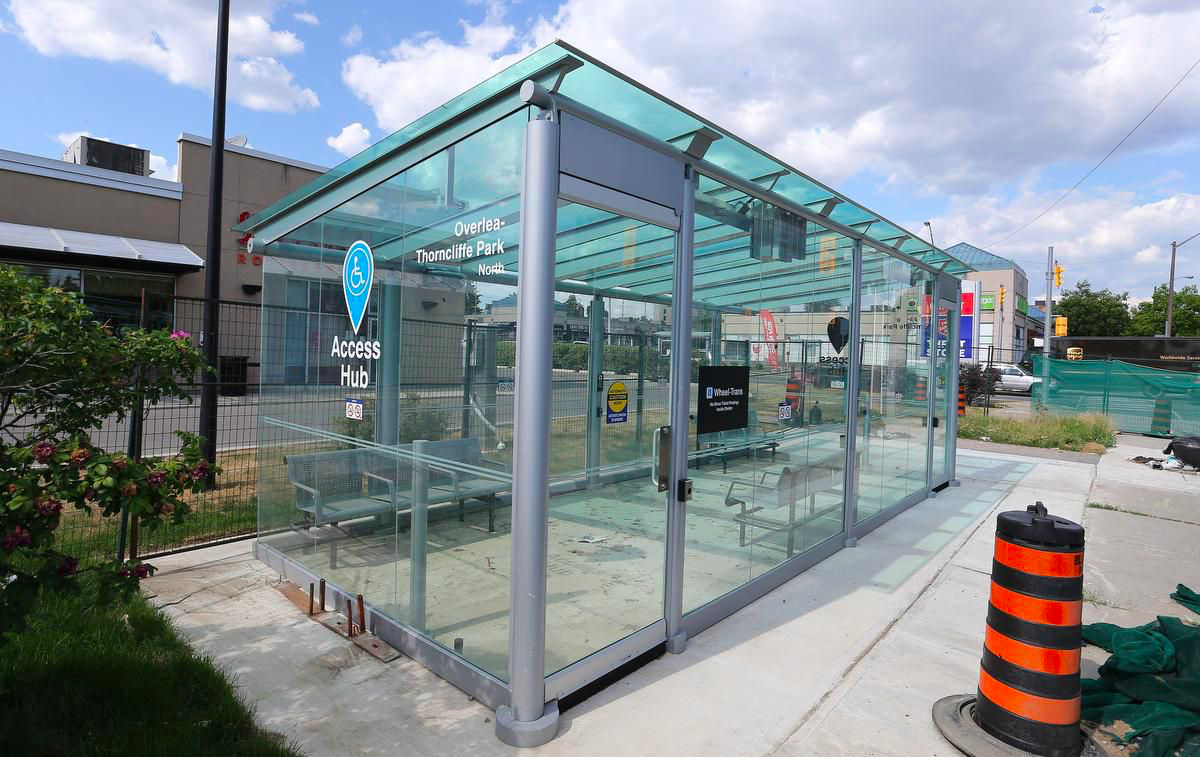
Toronto built 16 large, heated, disability-friendly bus shelters in 2020, and is planning to build another 84 of them by 2024. Here’s what they look like:

These are great. But there still some challenges:

  • In the City of Toronto (not counting the rest of the GTA) there are about 5500 bus shelters and more than 9000 bus stops, so building 100 heated ones by 2024 is not much
  • Each of the 16 heated bus shelters cost more than $400,000 to build, not including the cost of heating. (Heated bus shelters could be built more cheaply than this, but they are still expensive. In Fort Mcmurray for example, heated bus shelters cost between $40,000-90,000 each, plus about 100$ per month to heat on average).
  • At night, when the weather is coldest and the wait times between buses is longest, that is also when the bus shelter may be at its ‘sketchiest’, and some people may not always feel safe or comfortable waiting inside it

For these reasons, we need some additional ways to stay warm at bus stops in the winter. Here are five relatively simple (if silly) ways to accomplish this:

#1: Heated ‘arm’s length’ bus shelters

Bus apps – whether on your phone or on a display screen at the bus stop – make it possible for bus riders to wait indoors a short distance away from their bus stop, without needing a line of sight down the street to see the net bus approaching and without worrying that they will miss their bus. This could, in theory at least, allow a transit system like the TTC to rent part of an existing heated building to use as a heated bus shelter, rather than build heated bus shelters from scratch. This could also allow some bus stops to have bathrooms. Or, similarly, this could allow the TTC to build heated bus shelters as extensions to existing buildings, separated from the existing building by a wall (with or without a door connecting the bus stop to the rest of the building) and yet still able to share the existing buildings’ heating systems.

#2: Keep city sidewalks and crosswalks plowed and ice-free and well-lit and protected from cars

Today, again because of bus apps, it is easy to see if the next bus is not coming for a while. As a result, instead of waiting for your bus at a bus stop that has no shelter, you can choose to walk to the nearest bus stop that does have a shelter (maybe even a heated shelter) without worrying that your bus will pass you by on the way. Walking will also keep you warmer and busier than standing still. But, for older people especially, this is only possible in parts of the city where it is not difficult or dangerous to walk because of ice and snow and poorly designed intersections that favour automobiles over pedestrians.

#3: Bus Stop Treadmills

Treadmill Running in an Outdoor Gym – HypeDome

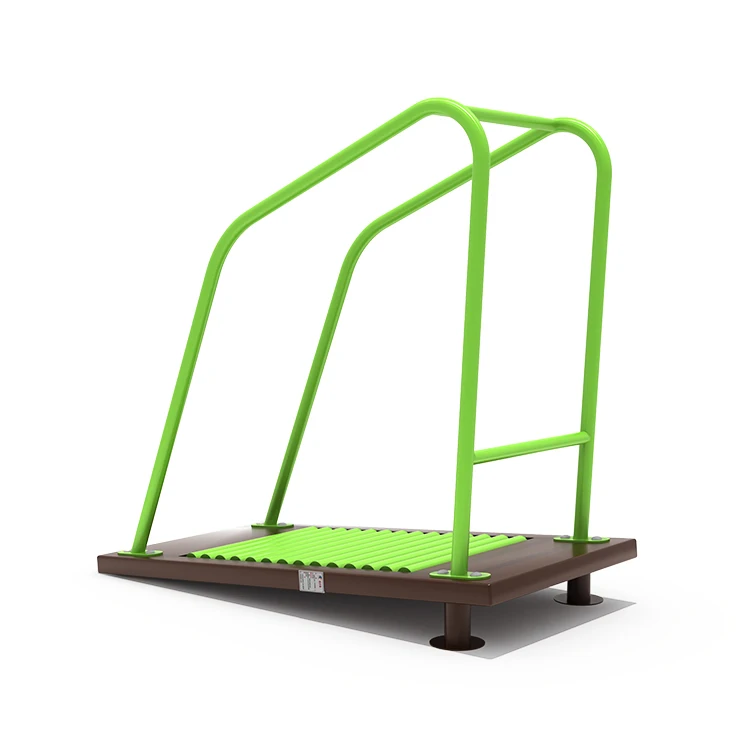
One of the easiest ways to stay warm outside is to not stand still. Cheap outdoor treadmills cost only about $100 each.

outdoor treadmill Promotions

Of course, putting decent outdoor treadmills inside of a wind-sheltered bus stop during the winter like in the picture above would cost a lot more than $100, but I would really like to see it happen somewhere.

#4: Sun-facing secondary bus shelters

In the daytime, a bus shelter in the sun will be much warmer than a bus shelter in the shade. And (once again) because of bus apps, waiting in a sunny spot near your bus stop without having to worry that you will miss your bus may now be easier than it used to be. By adding extra bus shelters in sunny spots next to shady (i.e. north-facing) bus stops, or by adding crosswalks that make it easy to get from the sunny south-facing side of the street to the shady north-facing side, it could become easier to wait for a bus on a cold day.

#5: Subsidize battery-heated clothing for low-income transit users

Battery-heated clothing now works very well, is not dangerous, and is much more efficient than heating entire spaces, especially when the clothing that is being heated is well-insulated. It can also be more convenient than wearing a big Canada Goose-style jacket – especially if you are about to get on a crowded, warm bus – since it is not so bulky and you can turn the heat up and down to your liking. But good-quality heated clothing can be somewhat expensive, and people who regularly have to ride the bus on the coldest winter nights tend not to be wealthy. The TTC could perhaps provide subsidies for heated clothing, to people who are already part of its Fare Pass Discount Program.

Anduin Prime: Middle Earth in the Second Age of Amazon

Amazon has entered its Second Age. Jeff Bezos stepped down as CEO last year, a generation after founding the company in 1994. Amazon’s market value has become second only to Apple and Microsoft, its revenues and number of employees are both second only to Walmart, and its profitability – after being famously unprofitable or profit-neutral until about 2017 – now ranks near the world’s highest.

Middle Earth, meanwhile, is entering its Third Age. Christopher Tolkien, the good steward and workhorse of his father JRR’s writings, passed away in 2020 at 95 years old. His editing and publishing occupied a forty-year period, beginning five years after his father’s death with The Silmarillion in 1978 – itself forty years after The Hobbit was published. This same generation saw a trilogy of Middle Earth film trilogies produced, starting in 1977 with The Hobbit, the first of three animated movies by two different companies in the 1970s, later continuing with the live-action Lord of the Rings movies directed by Peter Jackson in the 2000s, and finally coming full circle to end in a live-action/CGI hybrid Hobbit trilogy by Peter Jackson, which wrapped in 2014.

The final deal Christopher Tolkien made, following the last of these film adaptations, was to reach terms with Warner Bros. in 2017, to shop the rights to a Middle Earth TV show to Jeff Bezos.

The move toward a Middle Earth TV show is in some ways a continuation of the trend, shown in the chart above, of Tolkien adaptations becoming less and less rushed. The early animated trilogy had to cram The Hobbit and LOTR into roughly five hours of film. Then in the 2000s trilogy, each successive film got longer (even as each book gets shorter) on its path towards Mt. Doom and Best Picture. And in the recent, butter-spread-over-too-much-bread Hobbit trilogy, it took eight hours to cover the material within a single children’s book.

The last, and draggiest, of these, The Hobbit: The Battle of the Five Armies, covered only a few chapters. As one reviewer wrote, quoting from the book, “So began a battle that none had expected; and it was called the battle of the five armies, and it was very terrible.

Many reviewers, indeed, pointed out the hypocrisy of Hollywood in making two extraneous Hobbit movies both of which centred around the theme of not lusting after gold. It was additionally irritating, to fans of the book, that despite making three long movies when one would have been more than sufficient, the films still cut many of the book’s scenes out of the story.

Ultimately, maybe the best that can be said about the Tolkien film era is that old cliche about a .300 batting average being Hall of Fame worthy. 6 of the 9 movies were whiffs. Even the three live-action LOTR films, which are excellent in their own, Hollywoodized way, still did not have the runtime or the subtlety to include or do justice to characters and scenes that many fans of the books wanted to see. One might hope TV could provide the time needed to amend this. But that is not going to happen, as a Lord of the Rings show is not what is being planned. The new show will not be covering any of The Lord of the Rings or The Hobbit. It might not even be allowed to cover most of The Silmarillion. Instead, Amazon will more or less have to build a world from scratch.

A lot of scratch. At an estimated 250 million dollars just to buy the rights to the books’ title and backstory, and then a first-season production budget reported to be 465 million dollars, Amazon’s The Lord of the Rings will be far and away (and back again) the most expensive show ever made.

What has it got in its pocketses?
But what precisely is that story that Amazon bought? It will not be allowed to cover the long, mythic First Age of Tolkien’s invented universe, which is detailed in The Silmarillion and features a cast of demi-gods, fallen devils, early humans and prideful elves. Nor can it cover the heroic Third Age in which The Hobbit and the Lord of the Rings are set, with its hobbits and wizards and fellowships and rings.

Instead, it will be left with the mostly missing middle of Middle Earth, the antediluvian Second Age, centering on a Tolkienian version of Atlantis – Numenor, the numinous isle – peopled by a Methuselean race of humans who, corrupted by power and pride and fear of death, decide to assail the gods in a petition for immortality. In response, the God sinks the island (a Flood dream Tolkien himself claimed to have had recurringly in his life), removes the immortal god-lands to beyond the reach of men, and sends a surviving remnant of worthy Atlanteans back to the mainland. There, they found the besieged, dwindling kingdom that, centuries later, Viggo Mortensen will redeem and rule.

So… there are certainly some big ideas here as fodder for new canon. But there is also little in the way of specifics. The show’s era will predate established settings like the Shire, so Amazon will likely have to situate its HQ2 on Numenor instead, then try to staff it with new compelling characters and dialogue. According to the show’s official synopsis:

“Amazon Studios’ upcoming series brings the heroic legends of the legendary Second Age in Middle-earth history to screens for the very first time. This epic drama takes place thousands of years before the events of The Hobbit and The Lord of the Rings, and will take viewers back to a time when great powers were forged, kingdoms rose to glory and crumbled, unlikely heroes were tested, hope hangs on the thinnest of strings, and the greatest villain that ever flowed from Tolkien’s pen threatened to cover everyone in darkness. Beginning in a time of relative peace, the series follows a set of characters, both familiar and new, as they face the dreaded re-emergence of evil in Middle-earth. From the darkest depths of the Misty Mountains, to the majestic forests of the elven capital of Lindon, to the breathtaking island kingdom of Númenor, to the far reaches of the map, these kingdoms and characters will carve out legacies that will endure long after they left. ”

You might, perhaps, want to set this against an earlier quote by Tolkien, made in 1963:  

I am doubtful myself about the undertaking [of publishing Hobbit-LOTR prequels]. Part of the attraction of the Lord of the Rings is, I think, due to the glimpses of a large history in the background: an attraction like that of viewing far off an unvisited island, or seeing the towers of a distant city gleaming in a sunlit mist. To go there is to destroy the magic, unless new unattainable vistas are again revealed. Also many of the older legends are purely ‘mythological’, and nearly all are grim and tragic.

As with the three Hobbit movies’ repeated warning against greed, the irony may abound yet again in this adaptation. The world’s most famous chaser of both the heavens and immortality, Jeff Bezos, is behind this show that will likely have as one of its main plots the Numenorean folly of sailing upon the heavens in an attempt to seize immortality. (Well, Bezos is at least one of the most famous of these chasers. The other, Elon Musk, has Tolkien ties too. One of the major investors in Musk’s company SpaceX is his old PayPal Peter Thiel, whose software company Palantir, which just went public earlier this year, is named for the tragic sight-seeing orbs in the Lord of the Rings. Thiel is also, after Bezos, probably the most prominent member of the billionaires-for-immortality club). Between Mars and Middle Earth, the world’s richest men seem to want to influence the sci fi and fantasy shelves of our imagination… 

I am going to make a prediction here, though it may be much too cynical. I predict that this television show will be received so poorly that Amazon Studios will not make anywhere near the five seasons it has said it is planning – and maybe will not even make beyond the second season that it has already preordered. It will become, like the isle of Numenor, a legendary, cataclysmic sunk cost.

If I’m wrong about this, there will at least be plenty of time to glimpse all of those unattainable Second Age vistas. If Amazon’s five-season plan is carried out, that would presumably end up being 30-50+ hours of TV. (Season 1 is expected to have 20 episodes). 50 hours would be more than twice the combined length of all 9 Tolkien movies that currently exist! Fans wanted more Middle Earth. Amazon, as always, can deliver you what you want. It just comes with a lot of junk.

——————

Appendix I:

Any prancing pony can be a neigh-sayer (forgive me). But it’s harder to say exactly what you do want. If you could take the trillion-dollar reigns from Amazon, and manage to secure the rights for the LOTR books and The Hobbit, what would you want a new adaptation to look like?

I would certainly be interested to see a LOTR tv show. Having had my memory of the books jogged by this incredible, one-of-a-kind-audiobook made by Phil Dragash, I have a rough idea of my favorite scenes and characters that did not really make it into the Peter Jackson movies: Gandalf debating with his articulate foils Saruman and Denethor, the Boromir-Faramir-Denethor family dialectic, hobbit and hobbit-adjacent characters like the Sackville Bagginses, Barliman Butterbur, Ted Sandyman and “Sharky”, gaffers Gloin and Hamfast Gamgee, the Gandalf-and-Aragorn playing at Merlin-and-Arthur denouement (one of the Return of the King’s many denouements…), and even major characters like Bilbo and Gimli, both of whom get many of the books’ best lines, which the movies did not have enough run time to cover. Even the somewhat awkward Faramir-Eowyn denouement, and that talking eagle who third-wheels them, I’m into it.  

Nevertheless, for a number of reasons, these books are not at all easy to adapt well, especially not for mainstream audiences to enjoy. The Hobbit, in contrast, is a very easy book to adapt well, for kids and adults alike, in addition to being the necessary introduction to the LOTR. That’s why it’s a particular shame that both of the past attempts at Hobbit adaptations have been so disastrous. But, as they say, third time pays for all. A new Hobbit movie could be a good place to start, before considering whether or not to go on to do a longer-form Lord of the Rings adaptation afterwards.  

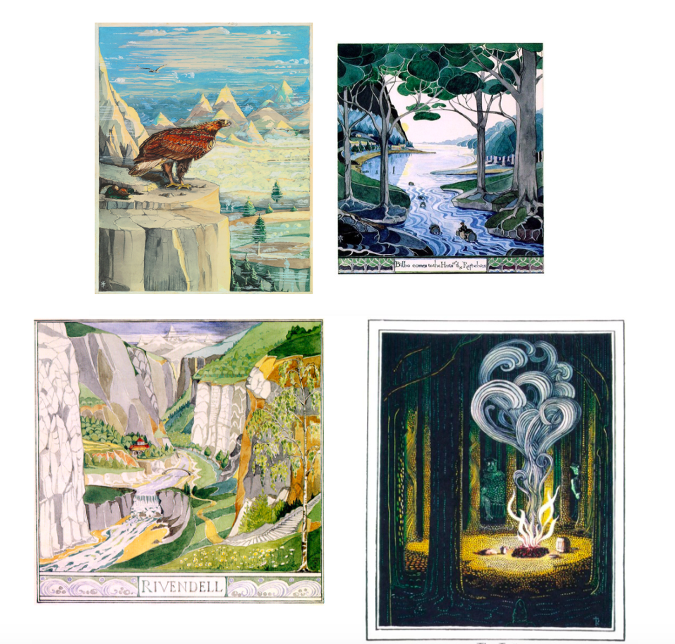
If a new Hobbit adaptation were made, to distinguish it from the iconic Hobbiton created by Peter Jackson and the amazing Ians Mackellan and Holm (as well as Andy Serkis’ infamous Gollum), I think it might be best to animate it. Maybe even to animate in a style based on Tolkien’s own beautiful hand-drawn Hobbit artwork:


Tesla’s Stone of Triumph

Tesla’s stock price rose sevenfold in 2020. It is now the fifth highest valued American company and by far the world’s highest valued car company.  

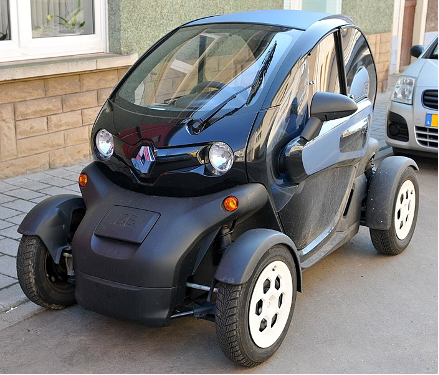
Whether or not this market valuation is warranted, Tesla’s cars have a snag: their battery packs weigh ~1200 pounds. That’s a lot of weight that each Tesla Model S has to carry around. By way of comparison, an entire Renault Twizy electric car weighs 1000 pounds, including a 200-pound battery.  

                                                                Renault Twizy  

All this extra weight may not limit Tesla’s business success, any more than the waste associated with other sellers of convenience and speed, like Amazon, have limited theirs. But it will guarantee that cars like Tesla’s do not come anywhere close to maximizing economic or environmental efficiency. 

The Wuling Hongguang Mini EV recently overtook the Tesla Model 3 to become the best-selling electric car in China at the end of 2020. It weighs about 1500 lbs., compared to about 3500-4000 lbs. for the Tesla 3. It has a top speed of about 100 km/h and an estimated range of 170 km, seats 4 passengers, and costs about $4500.

Tesla vs. Economy class
Electrifying transportation in an economic way is not rocketX science. There are a few simple ways to go about it:

These options all share the advantage of not having to lug heavy batteries around. Not only does this make them a lot more energy-efficient (particularly in trucking; the battery pack of a Tesla Semi weighs an estimated 26,000 pounds), but it also saves large amounts of energy and other resources needed to produce large batteries, and avoids the later challenge of battery disposal. (A similar, less frequently discussed problem exists with regard to the energy needed to produce the many computer chips that semi-autonomous cars like Tesla’s require). In the case of electric railways or trolleybuses, not requiring battery-charging stations can also help to save money, and time, and avoid the environmental problems associated with “fast”-charging. Plus, railways are simply more energy-efficient than automobiles. And for e-bike batteries, which tend to weigh only 5-10 pounds, or for the smallest electric car batteries, battery-swapping stations might become viable, something unlikely to happen on a significant scale for car batteries that weigh over a thousand pounds.  

Much of the confusion here comes from pursuing only electrification, rather than electrification and economization. While it is often pointed out that most electricity in the US is still generated from fossil fuels, and that even renewable sources of electricity can be problematic in various ways, what is almost never discussed is that even were 100% of US electricity to be renewable and non-problematic, driving electric cars like Tesla’s would still carry significant environmental opportunity costs simply because the rest of the world still generates most of its electricity from coal. America is not an island*: building and charging tens of millions of bulky car batteries means less power available for use elsewhere in the economy, and therefore possibly a greater reliance on imports of goods or services from other fossilier countries, or fewer fossil-free exports of goods or services to other countries. Ditto for social justice: spending needless trillions on cars means less money for investment in people.    

*A Canadian digression: actually, the US economy is like an island to a certain degree, at least compared to most other, smaller countries. But what is especially annoying is that the same arguments used to promote Tesla-style cars are also found in countries like Canada. Since Canada’s electricity already is almost all non-fossil-fuel based (hydroelectric and nuclear) and cheap (especially in hydro-rich Quebec, BC, and Manitoba), the argument heard in Canadian media is that all we have to do is get that last little bit up to 100% “renewable”, and then we can enjoy buying EVs. This, of course, ignores the massive opportunity cost coming from the fact that the rest of the North American economy still gets most its power from coal and gas. We may have a responsibility to economize the use of our clean and cheap power in order to help other parts of the continent wean themselves off coal – especially as some of the pollution from that coal directly reaches our air and water. Maybe I have not been paying close enough attention, but I have never once heard or read this Econ-101 line of thinking in Canadian media. At best it is only implied, for example in the newly popular argument that we need to pivot from exporting oil to exporting more electricity to the US following the cancellation of the Keystone XL pipeline by President Biden.

Battle of the Sedan
Similar challenges exist for conventional electric cars with regard to concerns like traffic jams, passenger and pedestrian safety, and ease of use for elderly people, people with disabilities, etc. Many Tesla supporters claim that autonomous driving will eventually solve each of these issues. That may or may not be true (or, to put it another way, it’s very probably not true) but even if it were true, it still ignores the pesky reality of opportunity costs, which force one to ask not merely “how might this improve things?” but also “how far from perfect would this still be?”

A future built around autonomous electric cars would still create more road traffic (even if they were able to travel in Musk’s underground tunnels) and require far more resources than would a future built around electric rail, lightweight electric vehicles, or wired electric buses and trucks. And that is without even counting the biggest opportunity cost of all: delay. Even if we get to a future of safe and fast electric autonomous driving by, say, 2030 or 2040, that still leaves a decade or two of lost life-years and injuries from car accidents, wasted time and stress in traffic jams, and other forms of loss, which could all be reduced much sooner than 2030 if we act intelligently.

This vision of the future also begs a further question: if cars are going to be driving themselves while we relax, then why do we even need them to have the top speed of a sports car? Where exactly are we rushing to in that automated world? And if we really are still in such a rush, why not simply have them drop us off at the nearest train station? Trains, unlike cars, can travel at high speeds without wasting too much energy.

Of course, a counter-argument to all this it that people actually want the type of cars that Tesla makes. And Tesla’s cars are still better than the internal combustion engine status quo, so why make the perfect the enemy of the good? Well, sure, that is an argument that can plausibly be made. But it’s not exactly the Tesla ethos, is it? I’ve never heard anybody say “hey, have you seen my new Tesla? It’s relatively decent. That Elon Musk is a real evolutionary”.

Many Tesla supporters still believe the company will change the world. With a market capitalization of 794 billion dollars, it could actually do so now. A good place to start would be no longer making cars with batteries as heavy as full-grown cattle.  

How to best play roller baseball

  1. Push the Outfield Walls way back;
  2. Pitchers and Batters and Catchers wear shoes; Fielders wear rollerblades

Playing baseball on skates has a long history. Ice baseball used to be common back in the nineteenth century. Modern baseball’s rule of running through first base supposedly comes from wearing ice skates. Rollerblade baseball too used to be played sometimes.

Roller baseball and ice baseball seem like fun sports to bring back. There are two basic ways to play them: with all players wearing skates, or with all players except for pitchers and batters (and catchers) wearing skates.

Both ways might be good, but I think the second option is best, for several reasons:

– if pitchers and batters are wearing skates, the game becomes more like softball or stickball than baseball. (There’s nothing wrong with softball or stickball of course, but I prefer baseball..)
– non-skate-wearing hitters and pitchers will produce harder hits, which, combined with the fact that all other fielders will be wearing skates, allows you to push the outfield walls way back. This in turn will mean a game with many more highlight-reel fielding plays and running plays, in contrast to modern baseball which is a game mainly of strikeouts, shallow home runs and routine fielding outs
– if base runners are wearing skates, it will be much harder to get outs (so baseball games would become even longer than they already are) and easier for injuries to take place

By pushing the outfield walls back and putting everyone except for pitchers, hitters, and catchers on roller skates, you get a sport which is more exciting (more and better fielding, more running), but still fundamentally unchanged (the contest between pitcher and hitter being the fundamental aspect of baseball). You might also get a much shorter game than normal baseball, because of the bigger outfield and the ability of roller-fielders to range further into foul territory to catch pop ups. The sport would have more exciting, quicker, and yet still authentic way of playing baseball.

You could, in theory, even have the fans’ stands raised at least 7 feet or so above the ground, allowing the fielders to skate underneath the stands to catch foul ball pop ups spectacularly behind them.

How to Create a Professional Outdoor Hockey League

When the weather is right, pond hockey is maybe the best sport there is. It is especially good when the rink being played on is built specifically for hockey, instead of being placed in the middle of a huge football or baseball stadium, far away from the fans, like the NHL’s outdoor games have by necessity had to do. Outdoor hockey arenas are also much cheaper to build than indoor ones, though for obvious weather-related reasons there are very, very few of them that actually exist.

Kisstadion in Budapest, Hungary, buit in 1961, capacity of 14,000 fans for hockey games
Las Vegas grasshopper invasion recalls Caesars Palace NHL game | Las Vegas  Review-Journal
Gretzky’s LA Kings vs the NY Rangers in Las Vegas in 1991 (temperature was between 29-35 degrees Celsius)
Not sure where this was..

Colosseum in Pula, Croatia, built by the Romans in 27BC-68AD
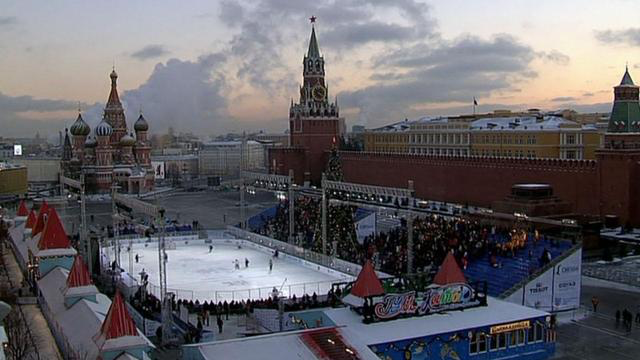
Red Square KHL All-Star Game, Team Jagr vs Team Yashin. (Putin played on Team Yashin)
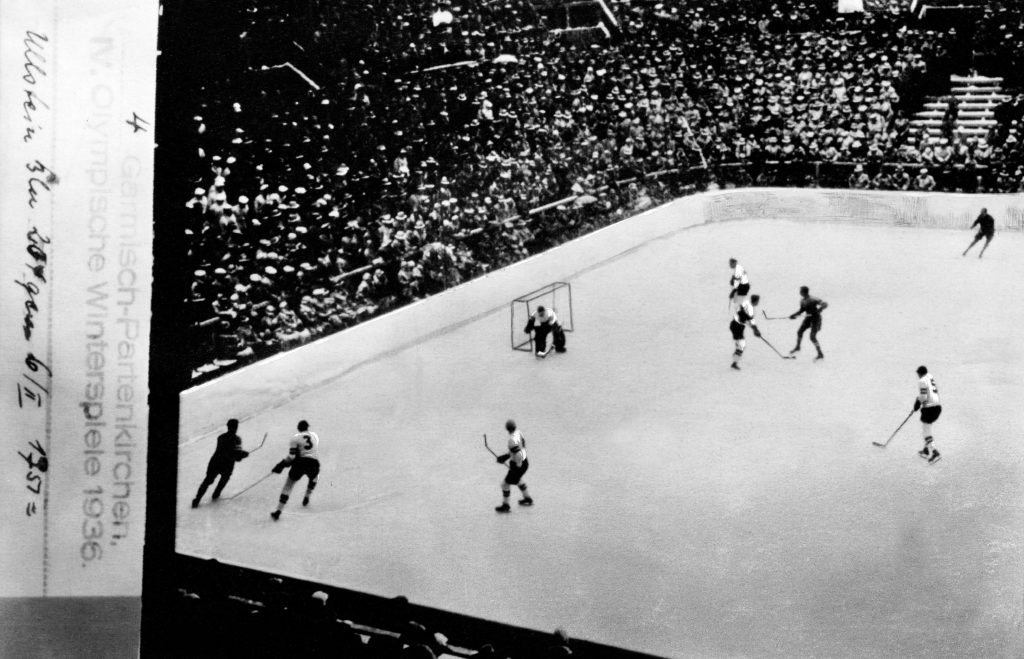
Garmisch-Partenkirchen in Nazi Germany at the 1936 Winter Olympics, played outdoors on a frozen lake. The Americans beat the Germans 1-0, during a snowstorm
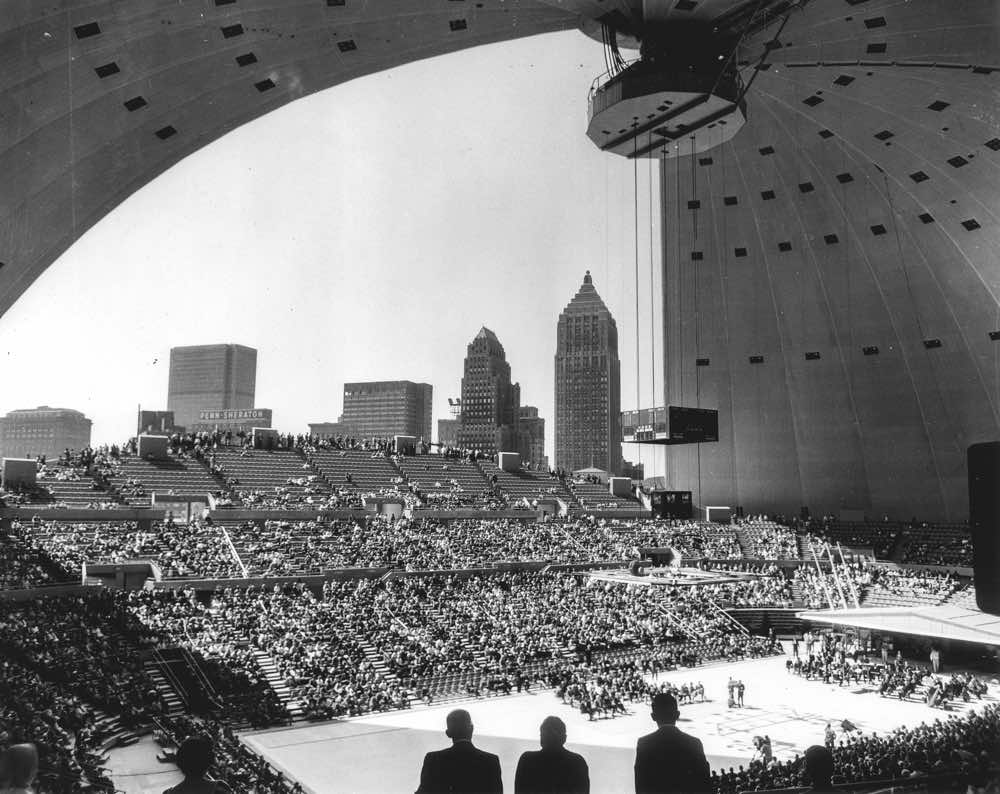
Remembering the Igloo: Penguins 50 | Pittsburgh Post-Gazette
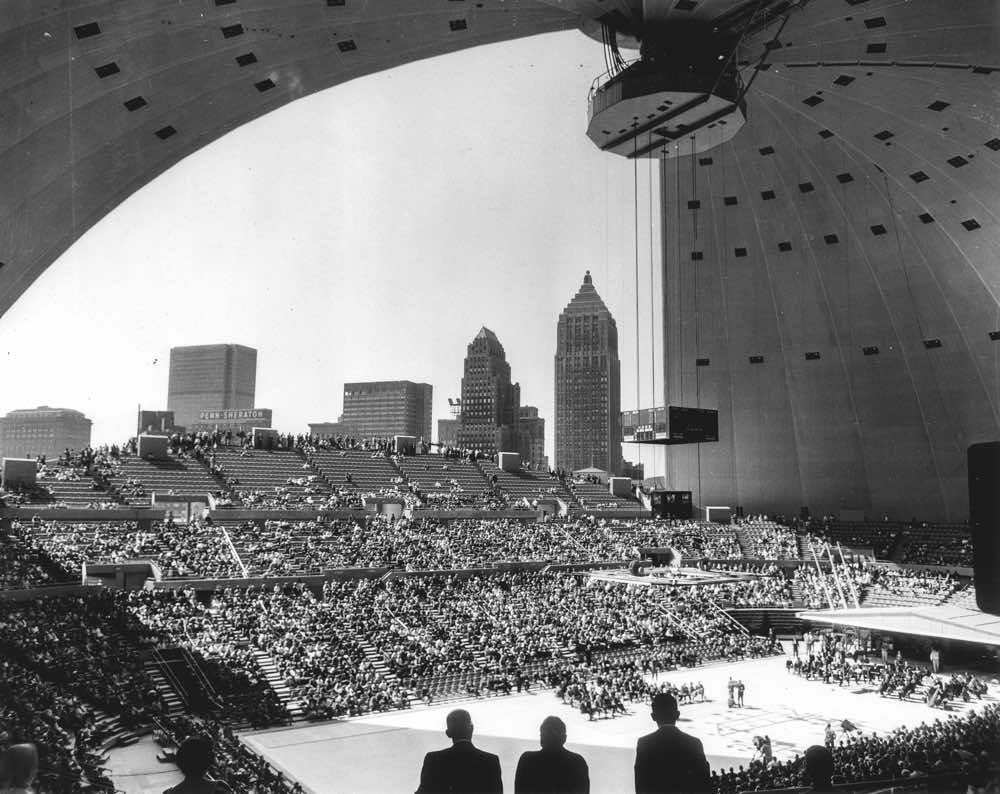
Best of all, Pittsburgh’s Igloo, opened in 1976 and demolished in 2012. It had a capacity of about 17,000 fans for hockey games
Event of the Decade: 2014 Winter Classic at Michigan Stadium
Finally, the Leafs vs Red Wings in Ann Arbor. Set an NHL record with 105,000 fans in attendance. Everybody had fun, but nobody was near the ice

Weather of course is the big challenge in setting up an outdoor hockey league. Even with the advances in outdoor ice maintenance that have been made in recent years for the NHL, the challenge is nowhere near overcome. At the NHL’s outdoor game in Lake Tahoe last year, too much sunlight forced a 10-hour delay. At this year’s outdoor game in Minneapolis, the temperature fell to -9 celsius, and the windchill to -18. And at a number of previous outdoor games, especially those held in southern cities, keeping the ice cold required a very wasteful amount of energy. The NHL’s commissioner Gary Bettman recently said the league will no longer hold outdoor games in these cities, in order to reduce the NHL’s climate footprint.

Even if an outdoor hockey league only included cities in Canada and the northern United States, it would still have to deal with plenty of hot, sunny, and even rainy weather, especially if its season were to run not only through the winter but also include parts of the spring and fall. Building expensive retractable-roof arenas in every city (like Pittsburgh’s old ‘Igloo’ Civic Arena) will also obviously not be economically viable anytime soon. And even if you did have the money to pay for retractable roof arenas, it would still leave you playing indoors much of the time, with little to distinguish your sometimes-outdoors league from existing professional and semi-professional hockey leagues.

The solution, if there is one, may be to create a joint ice hockey and roller hockey league, capable of playing outdoors in any weather. When weather conditions are good for ice hockey, you play ice hockey. When they’re not, you play roller hockey. This also allows your league to play through the summer, which in hockey-loving cities is usually the nicest time to be outdoors. A league which mixes pond hockey games on winter days with roller hockey games on summer evenings sounds pretty good to me, though admittedly I may be biased towards the idea as a Canadian.

Oh, and if there’s a pandemic, the league won’t need to turn fans away.


The Whole Winter Rental Car

It seemed a few years ago that car-sharing services like Zipcar or Car2Go might catch on. But it turns out people don’t really like driving cars that strangers have used before them. Plus, it’s expensive for car-sharing companies to ensure that cars are kept clean and accessible. In cold, suburban areas especially – in other words, in much of Canada, much of the time – people also don’t like having to walk to get to or from the nearest car-sharing car.

The Winter Car is a compromise between car ownership and car-sharing, aimed at solving these challenges. It’s sort of like winter tires, except it’s not tires, it’s a car. The idea is simple: you rent a car for the entire winter. Then, in summer, the car becomes a car-sharing or car-rental car, and you instead get around by walking, biking, taking transit, or using a car-sharing or car-rental car.

The winter car benefits its customers by giving them a car to avoid winter weather. The company renting out the winter car benefits by having cars available for customers in summer, when good weather makes it easier for customers to get to and from the rental area, and when there are more tourists and visitors in town to rent the cars to. And society benefits from having fewer people driving and parking their own cars in the summer, thereby reducing traffic jams and freeing up more road space or parking lot space for other summertime activities.

As with car-sharing generally, the winter car can also benefit drivers and society by allowing people to more often drive small cars than they otherwise would. While car buyers almost always opt for a large car, so that they can drive it comfortably on the highway or fill it comfortably with family or friends or mountain bikes or whatever, car renters can sometimes pick a smaller car, if they know they are only going to be using it for city driving. In some cases, a small winter car might be especially useful, as it would be easier to fit inside home garages so that its drivers would not have to clean the snow and ice off of their cars every morning, and it would fit in small parking spots so that its drivers can park near their destinations and so avoid having to walk further outside in winter conditions.

Of course, long-term car rentals do already exist. You can rent a car for several months from a company like Enterprise, for example. But I don’t know anybody who has ever done this, and I’ve never seen a company like Enterprise market its services in this way. I wonder if, one day, renting a car for the winter in a country like Canada will become something that becomes common.

On Big Z

Even in the most congenial divorce, the division of assets can hurt. When the Czechoslovakian men’s hockey team split after the country’s Velvet divorce in 1993, it was the Czech who ended up with most of the family fortune. With stars like Jaromir Jagr (second only to Gretzky in NHL career scoring) and Dominik Hasek (arguably the best goalie ever), the Czech would go on to win the gold at the 1998 Olympics, something that even the unified Czechoslovakian team had never been able to accomplish. 

Slovakia, however, still managed to keep the house: Zdeno Chara. 

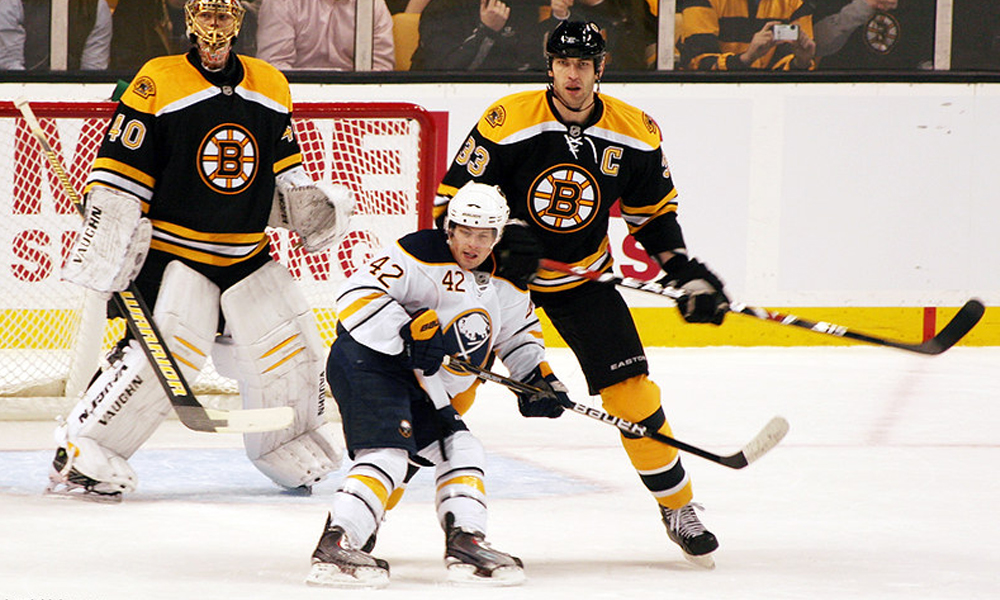
Chara was already 16 years old when the country split. He was just about to begin his hockey career playing for his hometown team in Trenčín, a small city five miles from the newly established Czech border. Unlike his father, Zdenek Chara, who had been an Olympic champion in Graeco-Roman wrestling, Zdeno Chara never got to represent Czechoslovakia in international competition. He did, however, inherit his father’s Olympian physique: At 6”9 (7 ft. on skates), weighing 250 pounds, Chara has long been the largest player in the NHL, dominating defensive zones for 21 seasons since 1998. Though he has only won one James Norris award for Best Defenseman—Nik Lindstrom often stood in his way, winning seven, leaving Chara with five runner-ups—he remains the perpetual winner of the Chuck Norris award for deadliest man with a blade.  

As of today, Chara is the only European player, other than that same Nik Lindstrom, to captain a Stanley Cup-winning team, having led the Boston Bruins to end a nearly four-decades-long Cup drought in 2011. Chara has been the Bruins captain for 14 years, during which time they have made it to the playoffs 11 times, and to the Cup finals three times. He would easily be the franchise’s greatest defenseman, except that, this being the Bruins, Chara will always rank far behind Ray Bourque and Bobby Orr. Nor is Chara even the greatest 43-year-old athlete in recent Boston memory — that honor goes to Tom Brady of course, six months Chara’s junior. Like Brady, Chara is finally leaving New England this season, but not yet retiring. He signed with the Washington Capitals last week, where he will join Alexander Ovechkin as both seek to drink from a second Cup. 

Much attention has gone to Chara’s flashier records, such as the speed of his slap shot (108.8 miles per hour, the NHL’s fastest), his size (the league average is 6”1, 199 lbs), his career plus-minus (the highest plus of any current player), or the fact that he played one of the longest ever shifts (4 min and 18 seconds) when he was already 40 years old. It is easier though to overlook the most impressive record Chara is building, because the NHL has not historically kept track of ice time played over the course of a career. The league keeps track of average ice time per game, a stat Chara has led the league in during past years, and even led the Bruins in last year at 42 years old. But look a bit deeper and you can see Chara is racking up an almost Lebron-esque resume for total minutes played, across regular seasons and playoffs. 

With 21 full seasons thus far, 15 playoff runs, 3 finals runs, and almost no time lost to injuries, Chara is the leader in both regular season and playoff minutes played, and shows little sign of slowing down just yet. He has racked up far more ice time than the player with the second most career minutes, iron man Patrick Marleau (who, at age 41, takes ice baths to reenergize himself during every intermission between second and third periods). By the end of this season Chara will become the fourth oldest skater ever to play in the NHL, passing hockey legends Teemu Selanne, Tim Horton, and Doug Harvey. That will leave Chara chasing only Jagr (who retired last year at 46 years old, and still plays pro hockey back in the Czech league), Chris Chelios (48 years old, retired in 2010), and the great Gordie Howe (52 years old!). Howe actually pulled off what Lebron hopes to do one day, ending his career playing alongside his son

This brings us to Chara’s other Lebron-ish attribute: making his teammates, and specifically his goaltenders, look amazing. Admittedly some of this may be coincidence; trying to measure an individual player’s impact in a sport like hockey can be a somewhat fuzzy pursuit.  But it is probably not a complete coincidence that Chara’s teammates in Boston have won the Vezina award for Best Goalie three times — Tim Thomas twice and Tukka Rask (who was also Vezina runner-up this past season) once. Both goalies have had exceptional seasons with the Bruins: Thomas had a season with the 2nd best save percentage in modern NHL history, and Rask a season with the 8th best. (Dominik Hasek, who had the 3rd best save percentage season, also played with Chara for a year in Ottawa, and played well, but he had already won 6 Vezinas and 2 MVPs by that point in his career, without Chara). Chara’s long reach and ability to remove opponents from the front of the net have made him particularly useful at limiting goals during penalty kills, at which the Bruins have usually excelled.  

I say all of this with a respect that is truly grudging. Chara’s shadow has loomed over my hometown team, the Toronto Maple Leafs, for two decades now. The Leafs have faced Chara in 6 out of their past 7 playoff berths, going back all the way to 2001 when Chara was still playing for Toronto’s provincial rival the Ottawa Senators. On the Bruins, the Leafs have faced Chara in three Game 7s — and are 0-3 against him. That record includes this Bruins comeback in 2013, one of the more devastating losses in Leaf history. Watch as Chara helps Boston score consecutive goals with the Bruins’ own net empty with about a minute left in the game, first with his slap shot and then by using his giant body to screen the Leafs goalie. 

It is easy, of course, to overlook hockey stars in America, especially in Boston where all three of the other big sports teams have been so great at the same time. Most sports fans probably have not caught on to what Chara has done in his career, or, even more impressively, what Connor McDavid, barely more than half Chara’s age, is now doing (McDavid has been sparking hockey’s own GOAT debate — if you haven’t watched any Oilers hockey since Gretzky, try watching a period this year and you will immediately see why). It’s good, then, that Chara is going to a team where another physically imposing hockey great, Alex Ovechkin, has helped put hockey on the map. Going into this season, which starts next week, both Washington and Boston are near the top of the betting odds to win the Cup. 

Chara may also have one more run left in him on the international stage, with the 2022 Beijing Olympics now a year away. Thus far Chara has won two silvers with Slovakia at the World Championships (a tournament held annually), but has not yet won a medal at the Olympics, where the best that the Slovaks have finished is fourth place. 

This, of course, begs the question that often follows divorce: what if they had just stayed together? A post-Cold War Czechoslovakian team would have paired Chara — and other Slovak stars, such as Marian Hossa — with the Czech greats like Jagr and Hasek. This is one of the big “what if’s” of Eastern European sports, along with the much uglier breakup that put an end to Yugoslavia’s basketball teams. (Somewhere, in a more peaceful alternate reality, Doncic and Jokic are building an Olympic juggernaut together…). With no Czechoslovakia in play, the road to gold has been much easier for the likes of Canada (which, unlike Czechoslovakia, is actually a country divided by language), or for Olympic Athletes From Russia, than would otherwise have been the case. 

All this is not just a eulogizer’s praise – Chara’s career’s not done yet.  Boston, it seems, wanted Chara to transition into becoming a penalty-kill specialist, but Chara still wants a bigger role than that, and Washington is prepared to give him one.  And if he can help his new team to one more Cup run, Chara will leave behind a hockey legacy that is nearly as unassailable as he is himself. 

Three NHL Overtime Ideas

  • If you can’t get rid of the shootout, at least add a 2nd OT with only players who didn’t play in the 1st OT.

    Third- and fourth-line players don’t usually get ice time during OT. Many top-line players on the other hand presumably tend to prefer a shootout to a 2nd OT period, because it’s less exhausting and injury-risky for them over the course of a long season. I assume this is part of the reason why the shootout hasn’t yet been abolished, despite the fact that OT is far more exciting and less gimmicky than shootouts are. The league should therefore consider introducing a 2nd OT period in which only players who did not touch the ice in the 1st OT are allowed to play. 


  • If you are going to keep the shootout (rather than go on to a 3rd OT, etc.), make it a ‘1 on 1’ shootout, instead of giving each team a 3-attempt minimum.

    The shootout currently gives each team a minimum of 3 shooters. It should reduce this to 1: if you score on the first shot and the other team doesn’t, you win. This would make the shootout faster and more suspenseful, as opposed to the current shootout format which is usually fairly boring and anti-climactic. (Also, we’re already adding in that 2nd OT in this hypothetical world, so let’s get this shootout over with asap). Nobody would want a 3-shooter minimum for penalty shots, so why do we have it for shootouts? 1 on 1 shootouts would also highlight the star players or skilled shootouters chosen to take that crucial first attempt 


  • Add a ‘Backcourt Violation’ in OT.

     Some teams have started boringly killing time and hogging puck possession in overtime, using the open ice that 3 on 3 hockey provides to skate around playing keep-away with the puck. The league should consider making it illegal to retreat back behind centre ice with the puck during 3 on 3 OT – or perhaps even to retreat out of the offensive zone, which players are now doing frequently, on purpose, in OT. (There’s a great clip of Mathew Barzal doing this several times in a row, easily and single-handedly holding on to the puck for his entire shift). Doing so should result in a defensive-zone faceoff. This rule change will also make shootouts less likely to occur.