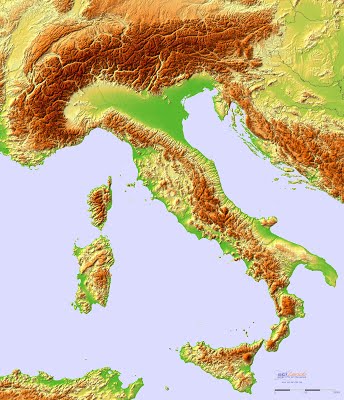
The results of the 2018 election in Italy reflected two main economic realities: the economic struggles in Italy relative to northern Europe, and the economic struggles in southern Italy relative to northern Italy. The former helped anti-establishment parties to gain a large share of the country’s vote. The latter resulted in Lega Nord and centre-right parties performing well throughout much of the north of Italy, and the 5-Star Movement performing well in the south of Italy.
In geopolitics, the school of thought that argues that geography is the most significant or fundamental element in politics, these two economic realities have the same obvious source: mountains. Italy and southern Europe are much more mountainous than northern Europe, and southern Italy is much more mountainous than northern Italy. Mountainous regions tend to be much poorer than non-mountainous regions. Italy is no exception.
The question most analysts are now asking is what the broader consequences of Italian politics will be. On the one hand, Italy is too big for Europe to bully. On the other hand, Italy is too big for Europe to ignore. I do not have any insight as to how one might succeed or fail at predicting the short-to-medium term financial outcomes of this political situation.
A question that analysts are not asking, though, is whether the geographic realities that are underpinning current Italian and European economics may change as a result of technological developments. To put it directly, will modern technology — the Internet, automation, etc.– alter the economic disparity between mountainous and non-mountainous areas?
If they were to do so, Italy would be in a far more advantageous position than it is today. Its internal economic disparities between north and south would shrink, while at the same it would likely be able to capitalize on its central position within the mountainous Mediterranean region. Its entire territory of 301,000 square km (84 percent as large as Germany’s, but with much greater proximity to the sea) and population of 61 million (74 percent as large as Germany’s) would suggest that Italy’s GDP might not, in the long run, remain as small (53 percent as large as Germany’s) as it is today. For this reason, if current politics cause Italian markets to turn negative, then long-term investment opportunities in Italy may grow.
So, will new technologies help the economies of mountainous areas to catch up with those of non-mountainous economies?
My suspicion is that they will. Companies like Google are now trying to develop technologies that will allow cheap, high-speed Internet to become accessible even in rural and mountainous areas. Logically, it seems plausible that mountainous areas would benefit from high-speed Internet more than non-mountainous areas, as the benefits of virtual accessibility may be more significant in areas where real, physical accessibility is low.
Automation may have a similar impact. If autonomous logistics facilities (warehousing, loading and unloading vehicles) allow for efficient intermodal cargo transportation, it could benefit geographies like Italy by making it easier to transfer goods between ships, railways, or large trucks (which do not operate well or at all in most mountainous areas) and small trucks (which do operate relatively well in mountainous areas, but are generally not efficient elsewhere).
And if transport vehicles themselves become autonomous, it could greatly increase the efficiency of using trucks, and particularly small trucks, and particularly small trucks operating in mountainous areas where speed limits are lower and safety risks are higher, as the labour costs involved in (especially small) trucking are far higher than in rail or sea transport.
In my view, the question of mountainous relative to non-mountainous areas may be the key long-term question in determining the north-south balance in Europe (just as the question of coastal relative to continental areas may be the key long-term question determining the east-west balance in Europe). Non-mountainous areas have performed extremely well economically during the past two centuries, presumably as a result of the spread of canals, railways, and highways, all of which are much better suited to flat landscapes than to mountainous ones.
But we should not assume that flat areas will continue to so outperform mountainous ones going forward. We should try not to lose sight of this long term question; it may ultimately be easier to answer than the questions about what will happen to Italian and European politics and markets in the shorter term.


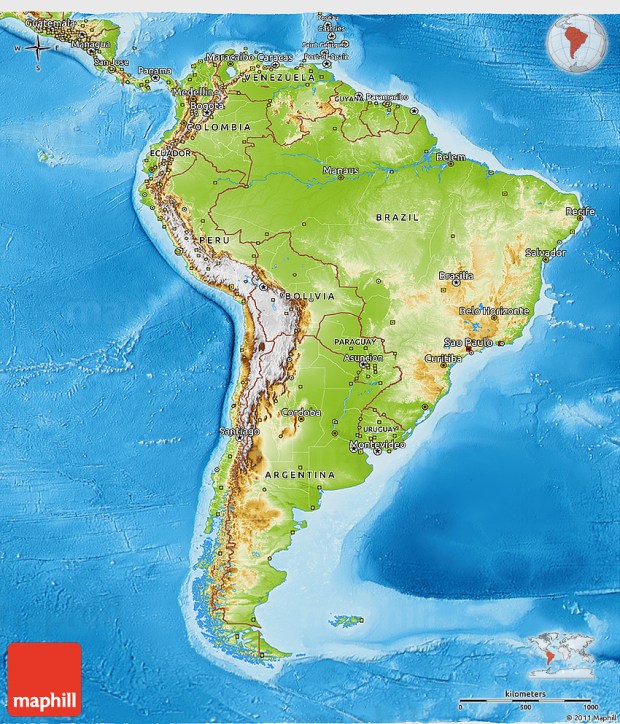
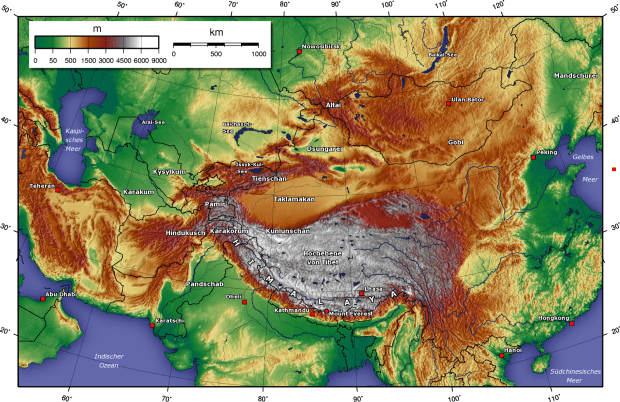 We should also not overlook the possibility of a similar economic integration between two large countries that are separated by the world’s other great mountain range, the Andes, namely Chile and Argentina. Unlike China and India, these two nations speak the same language. Their population centres, though separated by high mountains, are located quite close to one another. Chile’s largest city, Santiago, and Argentina’s fourth largest city, Mendoza, are only 175 km apart, as the crow flies. But they are separated from one another by mountains reaching over 5 km high.Greater integration between Argentina and Chile could help both to balance against their much larger, Portuguese-speaking neighbour Brazil. It could perhaps then allow (Ch)Argentina and Brazil work together towards a greater level of South American or Latin American economic or political integration. This could turn out to be as important as anything that might happen between East Asia and South Asia.
 2. Return of the Mediterranean(s)










 Future Economics