Usually, the goal of a basketball game is to outscore your opponent. There are certain cases, however, where a second goal is also at play: buying time for your best players to get a much-needed rest on the bench during a playoff game.
Star players tend to play many more minutes per game during the playoffs than they do in the regular season. The games are more important, there are no games played on back-to-back nights, and there are fewer flights between games. In this year’s playoffs, the leaders in minutes per game, Paul George, Damian Lillard, and Nikola Jokic, have been playing 40 minutes per game. (Lillard and Jokic played 58 and 56 minutes in a quadruple overtime game). Lebron James’ career playoff minutes per game is 42. In Lebron’s 21 career playoff elimination games, he averages 45 minutes per game.
It would be ideal if, during those few minutes of game-time when these superstars are resting, their backup players would enter the game and consistently outscore their opponents. But that is not the only way a bench lineup might be effective. They could, perhaps, also be effective by simply slowing down the pace of the game, shooting late in the shot clock, grabbing offensive rebounds to reset the shot clock, or drawing fouls that stop the clock altogether.
Consider two hypothetical bench lineups. One is an above-average bench lineup which usually outscores its opponent, but occasionally gets outscored by its opponents by a lot. The other is a merely average bench lineup which outscores its opponent only fifty percent of the time, but, because it excels at slowing down the game, almost never gets outscored by its opponent by a lot.
On teams which have dominant starting lineups and superstars, the merely average lineup might actually be preferable to the above-average lineup, as it would almost never cough up a big lead created by its dominant starters. There is, moreover, the issue of $$: above-average players are in high demand, so they tend to cost a lot of money. Merely average players who excel only at slowing down the game are not in demand, and so might be purchased on the cheap.
Of course, this is not to say that teams should want their bench lineups to be merely average. But it does mean some teams might benefit from targeting certain skills and strategies for their benches: scoring late in the shot clock, offensive rebounding, drawing fouls, defending in such a way as to make opponents shoot later in the shot clock, etc.
This idea raises some interesting thought-experiment questions. For example:
-how much could you slow the pace of the game without sacrificing too much effectiveness? (The average possession length in the NBA this season ranged from OKC’s 12.9 seconds per possession to Cleveland’s 15.5 seconds per possession. In the playoffs, it has ranged from OKC’s 12.7 seconds to Denver’s 15.5).
-How high could you theoretically get your offensive rebounding percentage? (Denver had the highest offensive rebounding percentage this season, 30.8%. The highest in the playoffs has been Philadelphia, 31.2%).
-How much could you increase your offensive rebounding percentage without giving up too many transition opportunities? (The Clippers and Nuggets tried to grab offensive rebounds on an estimated 70% of their shots in these playoffs; the Raptors only on 46% of shots).
-When and how often is it worthwhile to foul in transition to stop the clock? How often would fighting for offensive rebounds lead to a stopped-clock situation as a result of fouling, being fouled, a jump ball, or an out-of-bounds? (Out-of-bounds stoppages on contested rebounds might be ideal, as they are most likely to lead the refs to waste a lot of time looking at the replay to see which team touched the ball last in a crowd under the net).
Obviously, many of the skills that would allow a lineup to excel at slowing the pace of play would overlap with those that make basketball lineups good in general. But the overlap is far from a perfect one. By focusing not just on creating the best possible bench lineup, but also on creating the bench lineup most capable of wasting time, you might be able to free up roster spending in order to land the big fish superstars you need. All your bench has to do then is waste a handful or two of minutes, to let those superstars catch their breath.
How’s the bathroom business doing, Jim? Well, the profitability ratio stinks, but there’s a lot of liquidity.
Nothing is more common as having to go to the bathroom, yet there are few examples of for-profit bathrooms in our otherwise profit-oriented cities. Even though bathroom access is often bartered indirectly – “customers only” comes to mind – such access is almost never charged for outright.
Outside of sports arenas and shopping malls, bathrooms also tend to be quite small. This is understandable, given the high cost of commercial real estate. Nevertheless it runs somewhat counter to the natural economy of scale that is bathroom installation. Once you have already ripped up the floor and sorted out the plumbing, the cost of each additional toilet or sink may be comparatively low.
There are, perhaps, reasons to think that for-profit bathrooms will become more common soon:
Micropayments
Transaction costs are the scourge of any high-liquidity, low-margin market, and the bathroom business is no exception. If you are planning to charge a dollar (say) per person, then obviously you are not going to turn a profit if you have to hire somebody to man the till or pay a transaction fee to a payment systems company. Only with an automated, extremely low-cost payment system might for-profit bathrooms actually work.
By telling you where nearby bathrooms are, apps could allow bathrooms to be findable even if they are in relatively out-of-the-way locations where real estate is not so pricey: in basements, second floors, side streets, etc. Apps could also let people reserve the use of a bathroom immediately ahead of time, or at least check to see if there is a bathroom available.
Transit Tech
As transit systems introduce features like, for example, two-hour transfer passes, their passengers will be able to get off a bus or train to use bathroom without being charged a double fare. Transit apps can also help in this regard: passengers can now check to see when the next bus is coming, and so can estimate whether or not they will have time to use the bathroom without missing it. This will also allow passengers to wait indoors for the bus when the weather is bad; and in some cases, perhaps, do so near a for-profit bathroom.
Robots
It might also be possible to automate much, or at least part of, the process of cleaning a bathroom, which could go a long way towards making a public bathroom profitable. Expensive bathroom cleaning robots might also make public bathrooms more of an economy of scale; the toilet-to-robot ratio would increase the more toilets a bathroom has.
Babies, Boomers, Bloggers
[Okay, I may be tipping my hand here by including bloggers in this group]. Demographics and technology really are changing where many people do (their) business. The Baby Boomers are getting older. Many of them are approaching partial or full retirement and seeking to work or relax more in public spaces close to their homes, rather than continue making long commutes five days a week. Mothers too (and sometimes fathers), with fewer children and better computers and careers than ever before, are spending more time in public spaces with their babies. They need places where they can breastfeed and change diapers, and bathrooms large enough to fit in strollers.
Of course, a profitable bathroom does not need to be a for-profit bathroom. It could instead be that bathrooms will become more common, cleaner, or less costly for the public sector to provide.
In recent years there have been two excellent new technologies, car apps and transit apps, which have nevertheless been unable to successfully solve traffic problems. Transit apps, which tell you when buses or trains are coming and, in some cases, tell you how crowded each bus is*, are useful but are still no antidote to challenges such as getting to and from bus stops or waiting for buses in bad weather. Car apps, which can summon lifts or carpools or make it easy to rent a car, tend to do little or nothing to alleviate traffic jams, and can also be relatively costly or inconvenient, especially in bad weather when there are no vehicles nearby, or when demand for lifts outstrips supply.
*This is very useful because buses tend to bunch fairly close together, and the front bus in each grouping tends to be much more crowded than the buses behind them. With this information, people can simply wait a tiny bit longer to get on a less crowded bus, without taking the risk that the bus further behind will be just as crowded or will not arrive any time soon.
What might be needed, therefore, is a way to use these new technologies to get to and from transit, especially in bad weather, and make it easier to wait for buses in bad weather, and do so without adding to traffic jams that block more efficient modes of transportation such as buses or streetcars or (in good weather) bikes.
In suburban areas where people do not live near bus stops and where streets are not designed well for pedestrians, the car-sharing cars could be used to help people get to and from bus stops.
In the event of an unexpected delay in the bus or streetcar system (e.g. a subway line is temporarily shut down or a streetcar line is temporarily obstructed, leading buses to become overcrowded) or if there is a sudden change in the weather (e.g. a sudden rainstorm), or if you have a personal emergency (e.g. you really have to go to the bathroom and your bus is late) you could have the option of simply paying to drive a car-sharing car to your destination
the car-sharing car would not necessarily need to be a conventional car, but could instead be a tiny one-seater car, or an electric-assist pedal-car, or even an enclosed bicycle or tricycle. This would work very well on streets where there is a bike lane or a street-parking lane. Indeed, this would be ideal for a street in which a bike lane becomes a parking lane during winter. People in the winter want street parking so that they don’t have to worry about slipping on ice, and want sheltered bus stops where they can stay warm while they wait (often for a long time, since bus delays are more common in winter). When the weather is nice, on the other hand, people do not need street parking or sheltered bus stops, so the parking lane could instead become a bike lane. This bike lane could then be used not just by regular bicycles, but also by the car-share enclosed bicycles and tricycles and pedal-cars and one-seaters.
The cars would not contribute too much to traffic jams or air pollution, as the cars would be used mainly to get to and from buses, and as most of the cars could be very small, lightweight, and possibly electric or pedal-powered or both.
If they are electric, the car-sharing bus stop parking spots could perhaps double as charging stations. A car-sharing sheltered bus stop charging station might be an ideal charging station from both an economic and environmental point of view, because slow-charging batteries is better than fast-charging and as lightweight vehicles are far better than conventional electric cars
The cars could perhaps also be vehicles that would facilitate carpooling. You could, for instance, have a car-sharing van or minibus that would serve as a sheltered bus stop but could also be driven itself (if the bus or streetcar was running late, etc. etc.), if the passengers were willing to split the cost of driving it and if one of the passengers is willing and registered to drive it and then drop it off at another bus stop
It is not just car-sharing technologies that could make this idea viable, but also transit apps.
By having the cars equipped with these apps, people will able to use them as sheltered bus stops without needing to have a clear view of the horizon to see if a bus is approaching. Even though these cars would ideally be located immediately next to bus stops, the ability to know in advance when a bus is coming means that if necessary they could be located a bit further away from the bus stops, on an adjacent side street, without the risk of people missing their bus.
That might not even be needed though, since the car-sharing bus stops might not need to take up much more space than the current public bicycle-sharing systems often do, particularly if one-seaters or pedal-cars are used. (In Toronto, there are already 360 public bicycle-sharing stations, even though few people use them in the winter or during heat waves). People would then be able to use their transit passes to unlock the car’s door by prepaying their bus fare, so that the cars would not be misused too much.
Most of us have heard the crude joke that ends in the punchline “We’ve already established the principle that you are a whore. Now we’re just haggling over the price”. Well, in hockey, I would like to argue for the principle that the best time to pull your goalie is when your opponents are physically exhausted from being stuck on the ice during an especially long shift. Though obviously it is difficult to know how much earlier than usual a team would be wise to pull its goalie in order to take advantage of facing exhausted opponents, still I believe they should consider doing so at least somewhat earlier than usual. There are three reasons why:
It is harder for them to score and easier for you to score
This sounds like circular reasoning, but really it might just be common sense: you want to pounce on your enemy when your enemy is weakest. When players are exhausted, it is harder for them to get the puck and score a cross-ice empty netter. (And, if they attempt to do so and miss, it will lead to an icing that will allow your team to bring on a fresh line against their exhausted one). Similarly, when they are exhausted it will be easier for your fresh-legged extra attacker to help your team get a high-quality scoring attempt.
It is easier to get the extra attacker into the offensive zone
Coaches generally try to pull their goalies when their teams are already in the offensive zone, but they often fail to do so simply because holding onto the zone is so difficult in hockey that the opposing team is frequently able to clear the puck out before the extra attacker has time to get there himself. As a result, teams with their goalie pulled often waste precious time or give up an empty net goal trying to regain entry and get solidly set up within the offensive zone again. Against an exhausted line, in contrast, it is much easier to hold on to possession, so your extra attacker will more likely have time to join the play while your team is still set up in the offensive zone.
The Spiral of Death
Exhausted players are usually bailed out by their goalie, who freezes the puck to let them get a line change or call a timeout, or else they are bailed out by so-called puck luck: a favourable bounce of one sort or another, which allows the exhausted players to clear the zone and start a line change. But if you bring on your fresh extra attacker, the exhausted opponent will become much less likely to be bailed out by their goalie or by puck luck. Their goalie will have a harder time freezing the puck as he is more likely to be screened during every shot and outmanned in every scramble in front of the net. Puck luck too is less likely to be helpful to the exhausted team because, of course, puck luck is not mostly about actual luck, rather it is about open space – which there will be less of – and about effort and skill – which exhausted players have much less of.
Thus, you may trigger a spiral of death: exhausted players will be much less able to get a line change in, and so will become even more tired, and so will become even less able to get a line change in, and on and on until finally the spiral reaches a point of conclusion: ideally, the game-tying goal.
—
So: Do you, reader, believe this principle I am trying to establish? Good. Then let the haggling begin.
On the anniversary of the Yonge street van attack which killed ten people a year ago, Canadian media has been debating whether or not city streets should put in place more barriers to help keep pedestrians safe in the event of any future van attacks. This seems to be missing the point: Toronto had not one but two terrorist attacks in the past year, the Yonge van attack and the Danforth gun attack. Luckily – in the relative sense only – no more than thirteen people were killed. But one does not need to be a neurotic to consider what might have occurred if, instead of Yonge and Danforth, they had attacked Yonge-and-Danforth: Canada’s most crowded subway station.
Now think back to Toronto. An attack at Yonge-Bloor station is frighteningly easy to imagine: a gunman, or gunmen, at rush hour, just as a train or trains are pulling into the station, videos of the result circulating online immediately afterwards. Aside from any damage such an attack might cause directly, it would potentially have even graver secondary impacts in the form of copycat attacks, car accidents, air pollution, political consequences, etc., not just in Toronto but also nationwide and beyond.
The point here is not to ask Canadian media to debate how to make areas like Yonge-Bloor safe from gunmen – that is not a discussion we would ideally need or want to carry out publicly. Rather, Canada’s intelligence agencies and governments should perhaps immediately address the problem. Waiting until a decade from now, when a relief subway line will hopefully be built and Yonge-Bloor will be expanded, may be taking a very big risk. Indeed, the station expansion may even increase crowding during construction for several years.
There could, maybe*, be relatively simple ways of reducing this threat. For example:
Create a rush hour bus-only lane on certain streets (Yonge, the DVP, Don Mills, etc.), to reduce crowding on the Yonge subway in the years before a new subway line is built
Do not allow able-bodied people to enter Yonge-Bloor station from the street during rush hour; widen pedestrian space on Yonge to make it easier for these able-bodied people to walk (or, perhaps, take a bus on Yonge) to get to neighbouring subway stations Wellesley, Sherbourne, Rosedale, or Bay. This would reduce crowding in Yonge-Bloor not only by reducing the number of people who use the station, but also because, with no able-bodied people entering the station during rush hour, staircases would be much clearer, and crowds would therefore disperse more quickly following the arrival of every subway train.
*I will admit: despite what I have written above, I know basically nothing about the risk of an attack of this kind, or how that risk should be addressed. [I will even cop to the fact that I may to some degree be using the fear of such an attack manipulatively, as a way to promote transit-friendly or pedestrian-friendly policies that I would want even if no such risk existed…]. I would, therefore, be very interested to learn what people who are actually knowledgeable think about this issue.
In any event, these two suggestions seem unlikely to occur; many would see them as (to quote Doug Ford) “a war on the car”. Yet maybe seeing them as a war on terror would be much more accurate.
One-seater electric automobiles may be on the rise, thanks to vehicle-sharing apps and range improvements in batteries. It is possible that these one-seaters will be a slothful and anti-social mode of transportation, like they are in Wall-E. Perhaps more likely, however, is that one-seaters will facilitate transportation that is actually more healthy and social than our existing four-wheel-dominated system. One-seaters may promote cycling, either via velomobiles (one-seater lightweight pedal-cars with an electric motor so that cyclists don’t have to break a sweat going uphill) or via the creation of more bike lanes in cities with relatively extreme climates (lanes which one-seaters would have mostly to themselves whenever the weather is not friendly to bicycles). One-seaters may also promote transit ridership, by making it easier to get to or from stations.
How then should cities prepare for one-seaters? While it would be nice if streets had three separate lanes for buses, bicycles, and one-seaters, this is not likely to be politically viable any time soon. Cities may need to be more creative, and more compromising, in seeking ways to promote one-seaters as an alternative for normal cars without unduly limiting transit or bicycle usage.
One possible way of doing this would be a sort-of seasonal three card monty, using a bus lane and an adjacent bike lane. When the weather is bad – say, during winter or a long heat wave – one-seaters would share the bus lane with buses and use the bike lane as a parking lane. This would allow a senior citizen to park close to his or her destination (or his or her bus stop), to avoid slipping on ice. It would also allow one-seaters to overtake buses at bus stops: if the bus pulls up to the curb at stops, a one-seater could pass the bus on its left. Similarly, it would give one-seaters the option of pulling over to let a bus overtake them.
When the winter or heat wave ends, the one-seater-parking lane would become a bike lane, usable by bicycles and one-seaters both. This would create less traffic for buses, at a time when the weather is nice enough to make walking to and waiting at bus stops a convenience. One-seaters and cyclists would however also be able to use the bus lane in order to overtake slower cyclists ahead of them, and to overtake buses at bus stops. Indeed, at times when buses do not run too frequently (nights, weekends), the bus lane would be left more or less open for one-seaters and the bike lane more or less open for bicycles.
It is true that bicycles would, comparatively, be the losers in this relationship. They would have to give up their bike lanes during the winter (or, in very hot climates, during the summer), and share them with one-seaters during the rest of the year. Nevertheless, given how few streets currently have bike lanes, cyclists might still benefit hugely from this relationship, particularly in climates in which bicycling tends to be a seasonal pursuit.
Let’s use a real-world example of where such a system could maybe be effective: Scarborough, Ontario. Scarborough is a suburb of Toronto, where the weather and distances people travel can be difficult for cyclists in the winter – and often in summer as well.
Unlike Toronto’s other suburbs, the shape of Scarborough’s coastline is slanted, giving the city’s main cycling path, the Gatineau hydro corridor (image above, map below), a diagonal shortcut route through the fairly strict grid pattern of the city’s streets. In a few years this corridor will be linked with the city’s newest half-subway line, the Eglinton Crosstown. The hydro/cycling corridor already connects, more or less, to a another subway line (at Kennedy Station), a hospital, a university, and, via the Don Valley, to downtown Toronto.
If one-seater lanes were built in these diagonal hydro corridors, and if a three card monty bus/bike/one-seater system were implemented on a number of Scarborough’s main streets intersecting these corridors, then the suburb’s transit, cycling, and driving might be significantly improved. Ideally, it will one day become easy to ride a bicycle or a velomobile from U of T Scarborough campus all the way to U of T in the heart of downtown T.
At the end of my boyhood and at the age of being able to manage a horse, I was brought to Lille before Duke Charles of Burgundy, then called the Count of Charolais, who took me into his service. This was the year 1464.
A quarter-century after that meeting, Philippes de Commynes was released from imprisonment (he has spent two years in prison, including five months trapped in a small iron cage), and set about catching up on his correspondence. One of his most pressing concerns was responding to a request from an old friend, an archbishop named Angelo Cato, for a contribution toward a history book the latter was hoping to compile, and Commynes appears to have set about dictating a reply as soon as he was free to do so. That reply would take him several years, and was to be divided into six volumes – two further volumes offering an update concerning more recent events would follow in the subsequent years.
Commynes was not, he was at pains to point out, a historian himself. He lacked all of the necessary skills of a historian: he did not speak (at least not with any fluency) Latin; he did not have the literary skill to invent appropriate speeches and episodes to enliven his narrative; his scholarship was far too inadequate to allow him to appropriate finesse historical events into the required classical and Biblical analogies; and his reluctance to lie meant that at times his recollections would fail to give full and dutiful praise to his social betters. He was not a historian – merely a source of information for Cato, who would use it for respectable, literary and historical purposes (and even in that regard, Commynes recommends others who may recall some details more fully). Instead of producing a work of art himself, Commynes laments, “I am merely sending you what immediately comes to my mind.” In place of respectable, scholarly, history, all Commynes can do is describe what happened, and why.
As a result, the Oxford Companion to English Literature describes Commynes as “the first critical and philosophical historian since classical times”; others have called him simply “the first modern writer”. Closer to his own time, Emperor Charles V referred to his manuscript – published after the author’s death and quickly translated into languages across Europe – as “a textbook for princes”.
Although Commynes himself protests that he is providing source material for a biography of King Louis XI of France (and, in the final two volumes, of his successor, Charles VIII), his work soon came to be known by the publishers and scholars as Commynes’ “Memoirs” – understandably, given that the narrative begins before Commynes meets Louis, and continues after the latter’s death. In this edition, the final two books are removed, along with a few digressions, and the scholar responsible believes that they have in this way, as the title indicates, produced a biography – perhaps the first true modern biography – of the monarch known as The Universal Spider. In truth, Commynes’ history is considerably broader than that: a portrait, not of one man, but of an era.
It is an era of immense importance. At least three of the defining events in the last half-millennium of European geopolitics take place in these pages: the rise of a modern, centralised France; the foundation of the Hapsburg empire; and the resolution of the Wars of the Roses. We do not learn much, except implicitly, of the broader social currents of the times; but we are treated to intimate and incisive portraits of the men who shaped the times, not as Great Men, but as terribly flawed men – and above all, the book offers contrasting analyses of two men with whom Commynes was as closely familiar as anyone ever was: Charles the Bold, Duke of Burgundy, and Louis the Prudent, King of France. The fate of Europe rests in the hands of these two men.
Let’s set the stage. Commynes is a Burgundian – a native of the confused border area between the kingdom of France and the Holy Roman Empire. The Duchy of Burgundy has always been, in law, a vassal of the King of France – but as France has been brought close to ruin, by enemies foreign and domestic, Burgundy has become a de facto independent state, swollen by advantageous marriages to the point where the Dukes now dream of an empire that stretches from sea to sea, from their dominions in the Netherlands through to the possessions of their allies in Provence and Savoy. As our story begins, Burgundy is perhaps the richest and happiest nation in Europe: its rich soils thriving under light-touch taxation, it has been at peace for over three decades under the benign, wise rule of Philip the Good, one of the richest men in the known world. Philip is ailing, but the nation waits eagerly for his successor, the fearless, charismatic Charles, Count of Charolais. Philip was godfather to young Commynes, and when the latter is orphaned as a child, the Duke brings him to court, and places him close to Count Charles.
France, meanwhile, has undergone a far more traumatic succession, only a few years earlier. Charles the Victorious, who, with the aid of Joan of Arc, somehow managed to save the nation from English dominion, and from her own civil wars, quarrelled terribly with his son (who once chased Charles’ mistress through the palace with a drawn sword), exiling the young Dauphin, Louis, first to the Dauphiné, and then from France entirely – the young prince was forced to take refuge in, of all places, Burgundy, a glorified beggar at the ducal court. When Charles died, Louis returned to Paris with an avenging fury, purging and disinheriting all those who had wronged him – most of the nation’s wisest and most experienced statesmen have fled to neighbouring princes, and the mood of the nobility is angry and bitter; the king’s own brother plots against him. The king’s writ struggles to run beyond Paris, as feudal vassals like the Dukes of Burgundy and Brittany, and the Count of Provence, are independent in all but name. In 1465, the year after Commynes comes to Philip’s court, France rises up, the great nobles of the land declaring a ‘War of the Public Weal’, a war of nation against king, for the common good. France is on the verge of a final dissolution, and Burgundy’s triumph will soon, it seems, have no obstacle. At that moment, Charles, the Burgundian heir, rides for Paris at the head of a vast army, his godbrother, Commynes, at his side.
Twenty years later, Burgundy will no longer exist. Its core domains will have been reabsorbed into a resurgent France, along with those of Brittany; while its peripheral territories will have fallen into the hands of the rising Hapsburg dynasty, a geographical anomaly that, Commynes seems to recognise, will set the stage for centuries of war. It’s an astonishing reversal of fate. As Commynes puts it:
It seems to me that at that time [the Duke of Burgundy’s] territories could more truly be called lands of promise than any other domains on earth. They were overflowing with riches and in complete peace – as they never have been since. The standard of living and the clothing of men and women were extravagant; the feasting and banquets were on a more prodigal scale than in any other place I have known of; the bathing parties and other entertainments with women were lavish and lax – if a little on the seamy side. In sum, it then seemed to the subjects of this house that no prince was a match for them – at least that none was capable of oppressing them. And in this world today I know of no princely house so desolate.
This is, at heart, the question that plagues Commynes, the question that he sets out to answer through psychology, through military history, and through philosophy: how could it be that Burgundy could fall so rapidly from such grace?
Commynes’ answer, needless to say, is that God did it. And at first, that might seem like a cop-out, but of course it’s not: Commynes is not insisting upon faith in a Godless world, he’s using the concept of a God within a conceptual system in which God is unavoidable. He is, as it were, only rephrasing the question: if nations fall when they fall from God’s favour, why do nations fall from God’s favour? Commynes’ answer has nothing to do with scripture, and little to do with doctrine: again, Commynes’ God is not a creature locked within a bible, but the animating principle of the entire world. To understand the world is to understand God; and although that might be impossible, that’s not reason not to try.
Commynes never really offers a coherent ideology of fate – that would, after all, be hubris. But he believes in a system in which God helps those who help themselves, yet moderated by a sort of karma. Those who do wrong face justice – in the next life, but also often in this. Evil, foolishness, and violation of the constitutional norms of states and societies are often repaid in the same coin, whether on the land – a prince who breaks his word to others finds his subjects break theirs to him – or in the soul – a prince who plots against his courtiers himself plagued by irrational, paranoid fears of his best advisors.
So while his theories may be lofty and divine, their application is more down to earth, and at the heart of Commynes’ history is a pair of contrasting portraits, psychological and political sketches of the two ‘great men’ who he believes have shaped the fates of their nations, for better or worse: Louis and Charles. One French; one Burgundian. One the paragon of a bygone age; the other the herald of modernity.
Duke Charles the Bold (sometimes translated ‘the Rash’) was, we’re given to believe, almost the perfect mediaeval monarch. He is attractive, strong, and intensely charismatic, the kind of man who can turn a battle by riding through it and exhorting his men one by one. He has an indefatigable energy and, Commynes tells us, an almost supernatural ability to suffer: he asks no more of his men than he is willing and able to undergo himself, and his men know it. He is decisive, and courageous not only physically but politically. His ambitions are sweeping. He can be violent, but he is not unusually cruel for his age, and he is good company for his court.
Louis, on the other hand, is a coward. He is plagued, as even he acknowledges, by a big mouth and a sour wit, and he is constantly offending people. He is not physically impressive. He overtaxes his people, and appears to have little sense of shame; nobody likes to spend time with him. He can’t really be trusted – his nickname is ‘The Universal Spider’ after all – and he is instinctively a vindictive, occasionally mass-murdering, arsehole.
But Commynes’ at-the-time-controversial thesis is that it is Louis who is the great monarch, and Charles the deluded prince who dooms his people.
Put simply, Louis has two key strategies at all times: avoid any true military contest; and, if in doubt, bribe everyone. He’s a political and military cockroach, constantly retreating, constantly negotiating (with multiple people, in contradictory ways), constantly stalling for time. He reminds me, if you’ll forgive the fantasy/pop-culture reference, of George RR Martin’s Littlefinger: he doesn’t exactly have a plan, as such, but he continually sows chaos, knowing he will eventually, somehow, benefit from it. Every alliance is against him is turned against itself. He follows a terribly Christian theory of politics: if your enemy strikes you on one cheek… thank him, applaud him publically, write the man a great big cheque, and ask him to slap someone else for you.
This is why, partway through the book, Commynes abruptly flees Charles’ military encampment and becomes one of the King’s chief advisors. It’s not just him – everybody does it. The pay is better, and the life much easier.
Ultimately, Louis’ greatest strength is his willingness to appear weak. He may remember slights, but he publically forgives them, and promotes his enemies; he may be opinionated, but he listens to his advisors, and he corrects his mistakes. At times, he even uses his weakness as his trump card, and works to maintain it. He gives advice to his enemies on how to defeat his allies (because he wants his enemies to feel strong, and hence to feel able to wait, rather than weak, and hence desparate to act). At one stage, fearing an explosion among the common soldiers that will destroy an alliance, he intentionally makes himself visibly vulnerable, to shame his allies into de-escalating the situation. It’s behaviour Charles – who at one point humiliates Louis by in effect holding him prisoner – could never endure. Charles is a more traditional, vain prince who cannot abide disgrace – and it’s ultimately that stubbornness that dooms him, and Burgundy, when he first attacks, and then refuses to retreat from the seige of, Neuss, despite being needed urgently elsewhere. It’s what leads to him lying dead in a ditch, his corpse unrecognised. Throughout Commynes’ account, Louis’ prudence, his ruthless exploitation of his own impotence, is contrasted sometimes explicitly but more often between the lines with the vanity and vainglory of the other princes of his age: Louis’ willingness to be weak, whch Commynes suggests is a lesson from his time as a beggar at the Burgundian court, is in effect a form of power. Perhaps the most striking example is when Louis is “forced” to pay “homage” to a number of English lords – he obsequiously sends them regular tribute, via an intermediary who, naturally, needs their signatures to prove to Louis that he hasn’t stolen the money for himself. It’s humiliating for Louis and a clear win for the English, they believe, even if they allow that the transactions can remain secret for the sake of Louis’ dignity… …except that now, if those lords ever give their king advice that’s not in Louis’ best interests, he can reveal (to their king or their public) that they are secretly on the payroll of a foreign power, receiving a regular pension for their services, and he has the carefully-catalogued original receipts to prove it. Only Louis can make being conquered into a form of dominance.
Commynes never exactly gives us a rounded or deep portrait of his king, as we might expect from a modern writer. And yet, through descriptions and through anecdotes, he constructs a striking and understandable image – reading Commynes, we feel as though we know Louis, just as we know Charles. Other characters benefit in this way as well, although many – such as the Count of St Pol – are too historically insignificant for the reader to really invest in. Others are shown briefly, but brilliantly – one of my favourite moments is the only appearance of Emperor Frederick III, who responds to a detailed military-diplomatic proposal with a rambling parable about bear-hunting. It’s a moment that perfectly displays both why Commynes can’t stand the man (he’s over-cautious to the point of inaction, lazy, pretentious and not that bright) – and why he deeply respects him (he’s an old man whose experience has bought him considerable wisdom, and he’s the only ruler secure enough in his position to be able to fob off monarchs with irritating parables without any consequences).
After the two duelling princes, probably the third character in the story is Edward IV, whom Commynes sees only from a distance (it’s disputed whether he may have served as an ambassador to England at some point, but it’s not mentioned here in any case). Edward is a monarch famed for his military prowess and valour, but, unlike Charles, he’s really only in it for the quiet life, prioritising food, women and entertainments. Through overconfidence, he manages to lose his entire kingdom in only 11 days. But this is England, where, as Commynes constantly laments, politics is not very stable or sophisticated – so he’s able to invade England, win two major battles, overthrow and kill the Earl of Warwick, and Henry VI, and the Prince of Wales, and complete a round of mass executions of his enemies, all within the span of another 26 days. Everything hinges on his being welcomed, while still virtually without troops, into the city of London, and Commynes explains the three main reasons why, after some debate, he was given access: his wife had just given birth and, awh, a royal baby, how exciting and cute!; he was deeply in debt to many of the richest merchants in town, who realised that if he didn’t regain the crown he’d never be able to pay them back; and most importantly, he can rely on “the influence of many ladies of rank and rich citizen’s wives”, because after a decade of womanising they were all “very good friends indeed” of his, and they nag their husbands until they let him in. It’s a reputation that gives Louis pause, and one of his priorities in negotiating with the English monarch is ensuring that the man never, ever visit Paris: “He’s a very handsome king,” Louis worries out loud to Commynes. “He’s crazy about women. He could find some clever sweetheart in Paris who would say such nice things to him that she’d make him want to come back…”
It’s a bizarre conjunction of great affairs of state – seasoned with little philosophical asides – with the intimately personal. It’s not, perhaps, great history by modern standards – broader social developments get only a sentence here or there – but it’s a very entertaining way of writing. It’s half Macchiavelli, half gossip column.
That intimacy, indeed, is sometimes almost shocking in its modernity. Commynes is emphatically not writing a mediaeval hagiography – sure, he he doesn’t go into many details on the sexual side of things, and he glosses over many things that might be of interest to a modern reader. But he depicts his characters as human beings – human beings who he in many cases knew extremely well. This is particularly striking in the later parts of the narrative, when the fortunes of the princes decline in turn. Charles is beset by mental illness after a military defeat, and although Commynes never uses that exact term, there’s little ambiguity in his description – he’s not shy about calling it an illness, and he’s not shy about the fact it’s primarily an illness of the mind. He even hypothesises a little about the appropriate treatment. The doctors and priests of the day favour blood-letting, and making the man bloody well shave properly for a start; Commynes, on the other hand, suggests beginning with humility before God, before moving on to talking therapies, discussing one’s fears and shames openly out loud, not worrying about disgrace, in a safe environment with a trusted friend or advisor (as “it is ineivtable since we are men, that deep griefs stir violent passions”). Sadly, trust is a rare commodity for rulers, which may explain why so many of these princes are at least a little mad…
Charles the Bold, Commynes’ first master
[it’s another example, incidentally, of how God is used in this world-view, not as a tool of superstition but as a call to reason. Commynes believes that when a man like Charles loses a campaign, it’s appropriate to ask what went wrong. But he mustn’t become lost in self-recrimination, and religion offers him a way out: instead of asking what is wrong with him, he can ask why God may have failed to favour him on this occasion. It allows reflection and consideration of one’s actions, without self-blame. Throughout the book, we see this mindset in which God is central not because of what he does – Commynes does not believe in a God who actively performs miracles willy-nilly, and does not even particularly stress God’s role as a rule-giver, except indirectly – but because of how human beings act toward Him…]
Similarly, Louis’s quality of life rapidly deteriorates when he suffers a series of debilitating strokes. At one point, Commynes literally has to hold the king as he spasms, and Louis’ speech is at least temporarily so impaired that Commynes has to translate what may be a deathbed confession to a priest who can’t understand what the king is saying. To say that Commynes was close to his subjects is an understatement.
It’s true that the book is closer to a series of anecdotes than to an academic historical analysis, although there are elements of the latter: Commynes does lay out a fairly detailed chronology of the wars and the diplomacy, and does his best to explain events in geopolitical, psychological and theological-philosophical terms. But it’s the anecdotes that stand out, combining a clear and personal touch with a lacing of dry, observational humour. It’s suprising just how modern Commynes feels in style, if not always in beliefs, and many moments continue to resonate with modern readers, either because of how things have changed (Commynes’ frequent exasperation toward the barbarian English and the way their leaders never fail to be equipped with a suspiciously convenient prophecy) or because of how they haven’t (Commynes’ old-man complaints about self-important minor celebrities these days constantly telling you to “speak to my people!”…). And while there are moments of tragedy, there are also a suprising number of moments of pure farce. At one point, for example, Louis is hosting a messenger from one of the Duke’s vassals, who is thinking of coming over to Louis; Louis, pretending joviality, baits the man into doing insulting impressions of the Duke, pretending to be a little deaf so that the man does his impressions as loudly as possibly; but, in the time-honoured traditions of Frence farce, what the messenger doesn’t realise is that Commynes is crouched alongside the Burgundian ambassador, hiding behind a suspiciously large screen in one corner of the room. The ambassador is outraged on the Duke’s behalf, and Louis succeeds in sowing even more disquiet between the Duke and his vassal.
[other monarchs would have seen the vassal as an ally, helped him, and used him against the Duke. But Louis knows you can’t trust a traitor. Instead, by weakening the vassal still further by betraying him to the Duke, he forces the vassal to come to him in a more fearful, and hence dependent, state, while distracting the Duke, and pretending friendship with him. In Louis’ world, you help your enemies and you hurt your friends…]
[Of course, sometimes Louis sees the right time to strike directly. He summons one enemy/friend to court, for example, by pleading for his help in a difficult time, saying that he could really do with having “a good head” around to advise him at a time like this. He then, having dictated the letter, observes to his henchmen by way of explanation: “I do not mean us to have his body – only his head. The body can stay where it is…“]
The greatest virtue of this books, however, and of Commynes as an author, isn’t just his access, or even his deadpan wit (which is always interesting, and amusing, but too dry to really be lovable). Instead, it’s his wonderful honesty. Now, apparently in the 20th century it was fashionable, particularly among offended Belgians, to paint Commynes as a serial liar, fundamentally dishonest in every word – but while that seems hard to believe to me (or to the editor of this translation), it doesn’t really matter in terms of the book’s value as a narrative, rather than as a historical source. Because either Commynes is truthful, or else he’s the most gifted liar in literary history, and in either case it’s the impression of honesty that is so powerful in reading these memoirs. Commynes has his own opinions, but he is scrupulously even-handed in discussing even his personal enemies. His goal throughout – perhaps reflecting the origin of this project as source material rather than a published text – is not to definitively paint history, but to understand it, and that requires him to see both sides of every dispute, and recognise the virtues as well as the vices of every participant. The result is a far more complete and sympathetic portrait of his life and times than we might expect… and a more accurate depiction of the conflicting thoughts common in his age.
Because if the book is interesting as a specific history, and as a guide to statesmanship, it’s most fascinating as a window into a bygone age – a window refreshingly devoid of the usual stained glass. I don’t think it’s an exaggeration to say that this comes close to being absolutely required reading for any fan of fauxdiaeval fantasy or historical fiction, and should certainly be obligatory for anyone wanting to write a story set in a similar culture.
Most strikingly, Commynes provides a very different picture of twilight of the middle ages not because of differences in how he sees the ruling systems, but because of the context of those systems. Put bluntly: this is not a little world of feudal clockwork; this is a vast, largely empty world in which a tiny number of feudal overlords play their games amid a vast ocean of people who, most of the time, don’t care in the slightest. Yes, by modern standards all these rulers are brutal dictators. But what Commynes shows us, and which is essential to understanding that brutality, is the naked weakness of a mediaeval prince, and the near-total impotence of all their structures of power. Charles, after all, yearns to construct an empire, but even this great leader of a great nation cannot accomplish it; Louis’ driving ambition is to modernise and harmonise the French legal code and bring a universal rule of law to the whole nation, but even this intelligent and ruthless man cannot accomplish it. These are men beating their heads against unbreakable walls, while at the same time holding on for dear life.
Surprisingly, it is the people who are at the heart of Commynes’ perception of politics. He is not a great fan of the ordinary people trying to rule themselves – he rolls his eyes at the predictable brutality and naivity of the endless revolutionary committees of the Low Countries – but he believes unshakeably that power comes only through the consent of the people. He sings the praises of the Parliament of England and its democratic powers – while he has no time for commoners making decisions, he does see them as a valuable veto force standing in the way of tyranny and foolish monarchs. But for him, the question is not whether the people should have power – that is an absurd question, because it suggests that there is any way to remove power from the people – but how it can be better organised. The power of the people is omnipresent throughout this narrative. It’s the power that lynches dozens of nobles every day whenever anger breaks out in a Belgian town (the nobles may be bastards, but they’re mostly legal bastards, whereas the commoners send for the hangman the moment they’re in charge); it’s the power that slaughters every English straggler and leaves their bodies in ditches, regardless of what peace treaties may be made between monarchs, and the power that sends commandos creeping through the streets of Peronne, happily willing to murder both King and Duke in their beds. It’s the power that coalesces a bunch of Swiss peasant farmers into what will become the most feared military force of the age; it’s the power of the common soldiers, who in the end decide not only how to fight, but whether to fight, whatever their generals might want. When the Pazzi family decide to launch a coup d’etat in Milan, it’s the power that determines, in a matter of minutes, which family will have its entire membership swinging from the church rafters by the end of the day, and which family will be in power. Above all, it’s the power of cities to control their own walls.
Because again, this is a huge world, and these are very small kings. In all these wars, very few armies are ever larger than the militia that could be mustered by a medium-sized town: a city like Amiens or Liege is a major challenge even for a monarch to subdue, and a city like Paris or London is effectively impregnable – the size of army necessary to either beseige or storm such a city simply is not achievable in this era. The fate of kingdoms rests, therefore, on the whim of common townsfolk. It’s the people of London who choose to accept Edward IV – then almost without resources – as their king, and in so doing doom the Earl of Warwick; just as it’s the people of Paris who decline to yield to the Duke of Burgundy and his allies, and in so doing leave Louis as their king and France as a viable nation.
Louis the Universal Spider, Commynes’ second master
As for those princes – well, it’s not long into the book that we’re thrown into the Battle of Conflans, and we see its absurd chaos, its contingency, its nonsense. Commynes tells us quite explicitly; monarchs and generals may form up their strategies, but there is no monarch on earth who can direct a battle according to his plan. A general does not so much direct his army, as ride it. So too, a monarch sits in his saddle upon the roiling chaos of his nation, prodding here, whipping there, offering carrots in one direction or another, but by and large able to do no more than desparately keep his seat, or else fall and be unceremoniously trampled.
These men are half statesmen, half petty mafiosi. It’s very easy for simplistic accounts to see them as only one and not the other – all politicians, or all robber barons. But Commynes shows us how they can be both at the same time. “In all of them were good and evil” he warns us, speaking of the great princes of his day, “for they were human beings.”
The depiction of women is also of interest (among many other topics). Commynes is writing in an extremely male-dominated world, and most of the women of the story go entirely without mention (there’s no way to tell, for example, that Commynes himself is married, and you’d have to read very carefully to notice that either the Duke or the King were married). Commynes essentially takes it as read that it’s men’s role to dominate, politically and socially, just as that’s also the role of the upper classes. And yet there is a refreshing lack of misogyny. Commynes doesn’t have to insist that men are superior, or argue that women shouldn’t have power – because in his culture, those questions don’t even arise. God has simply willed that men have power – there’s not need anyone inventing notions like male superiority to explain why that may be. Which means that when individual women do have power, Commynes has no grounds to object. He may depict Marie of Burgundy as naïve – after all, she inherited one of the greatest empires of Europe when she was still a teenager – but he doesn’t fail to respect her goodness, her popularity, and the beginnings of a sharp intellect. He is almost fearful, yet respectful – and depicts Louis as almost fearful – of the intelligence and ruthlessness of the Duchess of Savoy. The autonomy of women seems greater than one might expect here: not only can women veto arranged marriages at least some of the time, they can even insist upon love-marriages, even when strongly against the interests of the families and nations. Louis, for instance, is forced to accept the marriages of the Duchess’s two daughters, which strengthen his enemies, when the Duchess points out that the women are in favour of the matches, and that they’re not just political ploys. Similarly, even at a time when Marie is tantamount to held hostage by commoners, they are unable to pressure her into marrying their preferred candidate (Commynes wryly notes that it was seeing him and getting to know him that probably doomed his suit with her…). There are also surprisingly hints at a chivalry out of keeping with the general violence of the world: during a war, when soldiers are being murdered on the streets, Louis has his secret messages conveyed by a young woman, on the grounds that a woman alone can travel freely without harrassment, where a man would be at risk of attack by brigands. [Commynes, interestingly, does not make clear that it’s actually a woman who ends up imprisoning him in a tiny cage for six months…]
In short, where these memoirs excel is in vividly, intimately and fair-handedly depicting this late-mediaeval world and its characters, and in doing so with wit and insight.
Where they fall down, however, is in the sheer complexity of the events under discussion. It’s here that Commynes does indeed fail to be a true historian: what we are given is not so much a narrative as a whole mass of information, in mostly (but not always) chronological order. Take any few pages, and the sequence of events appears clear, because Commynes writes clearly; but as the pages mount up, so does the sheer assembly of places, dates, titles and, every few sentences, shocking betrayals. [Betrayals that sometimes fail to betray anyone, because the betrayal is betrayed before it can betray anyone…*] It’s not unclear, it’s just… a lot. It’s very dense, and that’s why it too me a surprisingly long time to read through the book, because after ten pages or so of the count of this and the bastard of that and trying to remember which one is Corday and which ones is Cordres, I just needed a change of scenery. Of course, that’s partly my fault, for not being in the righ frame of mind – as I say, Commynes does try to make these confusing events understandable, and I’m sure if I were in an academic mood I’d have no trouble with it, but as light entertainment reading I found it was making my head hurt.
[It doesn’t help that Commynes adopts mediaeval naming practices, which is to say he usually called people by their titles. This means that the same person can be known by two different names in one sentence (at one point he notes something along the lines that a person has been of service to the Count of Charolais, and was rewarded by the Duke of Burgundy – the latter being the same person as the former, but several years later), while the same name can refer to multiple different persons (as the name is inherited when its holder dies). When you have people like the King’s brother, who wears about six different titles in six years, this can get confusing…]
Some help, to be fair, is provided by the translator/editor, Paul Murray Kendall, who remains largely on the sidelines but who does chip in with the occasional explanatory footnote. Those coming to the text for academic reasons may be frustrated at how little commentary is provided, but for the casual reader I think it’s about the right amount – enough to let us understand what’s going on, but little enough that the narrative still feels like the work of the original author. Further background information on the author and his time period are provided in a forward, which could perhaps be more detailed in places but does probably as much as is strictly required. As regards the translation itself, it’s pretty good – there are moments when it seems to veer too far into modern colloquialism, or else too far into stilted archaism, but this will be a problem with any translation of a historical text that attempts to retain something of its character while still fully conveying its original meaning. By and large, I think the tone is successful – it has a clarity and straightforwardness that suit the style of the author, without appearing to try too hard to be contemporary. One small irritation is the way Kendall edits out some of Commynes’ tangents, replacing them with brief summaries – this is either done too much, or else it’s done too little. I can understand why an editor would want to trim the fat here and there, as Commynes does ramble on a little at times; but Kendall includes so much of the original text that it’s a little head-scratching why he’s bothered to edit out the handful of extra pages that he’s excised, while leaving other things in – I think I’d have been happier either with a more ruthlessly focused text, or else the whole thing in all its glory. But as we do only lose a handful of passages, this is honestly a very minor quibble.
[Another such quibble: not only as the translator stuck on the striking but non-original title, “The Universal Spider: The Life of Louis XI” to Commyne’s text, but the SAME translator has also written his OWN biography of Louis XI, using the exact SAME title. This is understandable – “The Universal Spider” has to be one of history’s coolest soubriquets, and it’s understandable the writer didn’t want to waste it on just one book title – but also probably a bit of a pain for people trying to find this specific edition (which is, incidentally, the old Folio Society edition).]
*this is a book in which a vassal can attempt to murder his liege and their entire family with a cannonade, and the next page we can be told with a straight face that “never was any man more loyal to another than [vassal] was to [liege]”. Oh, and while he’s trying to murder his liege’s family with cannons, the vassal also sends out two flasks of wine, because the liege’s daughter is giving birth, and it seems the decent thing to do to ease her labour a little. I mean, obviously he’s not going to not murder her or anything, but it would be unchivalrous not to give a woman wine when she’s in labour…
Marie the Rich, the tragic Duchess of Burgundy
In conclusion, in writing a text entirely for his age, without the pretenses of history (indeed, several times Commynes declines to describe some well-known event, because “you”, being people of the same era as him, will no doubt know just as much as he does…), Commynes has inadvertantly written something both invaluable as a historical document, and at the same time timeless. It’s a fascinating resource for anyone interested in the time period or its culture, not only for its intimate, first-hand account, but also for its combination of unvarnished honesty and wry irony; it is also remarkable as a study in political leadership, and one that has had a great deal of influence throughout the centuries. It’s dense with action and a little prone to tangents, and casual readers probably shouldn’t expect to skim through it all in an afternoon unless they have excellent heads for details, but fundamentally it’s an entertaining and understandable account, translated attractively. I thoroughly recommend reading it.
And if that’s my conclusion, what conclusion did Philippe de Commyne reach, half a millennium ago? In the end, this student of statescraft is left extolling the virtues… of the quiet life. By the end of the book, Louis is dead, his life crippled by paranoia – a king, Commynes says, who had so often condemned his enemies to dungeon cells is left, in his castle reinforced with iron towers, with no more freedom than a single courtyard, across which he is too frightened to walk to mass. Charles is dead, his lust for glory and military fame ending anonymously in the dirt – his mind and his courage stripped from him, and his body at the last left naked and unmarked in a common field. Marie is beautiful, witty, and phenomenally wealthy, held virtually hostage by her people, and dead of a tragic accident. Edward IV is dead; and his sons are dead, killed (Commynes believes) by his brother, and his brother is dead on the field at Bosworth. Charles, Duke of Berry, is dead, as is Francis, Duke of Brittany, and Frederick III will soon follow. Commynes, from being the closest friend and advisor to the king, is cast into an iron cage. France is set for a new round of wars, and Burgundy, Commynes’ homeland, has been destroyed and subjugated. So why, in the end, wonders Commynes, should anyone bother with ambition? Nobody can more fully subjugate a man than by his own fears; to be fearless is to treat others well, and that requires having as little to do with great affairs of state as possible. And so I’ll end where our author ends, and give Philippe the final words…
“Thus you have seen so many great men dying within a few years of one another, men who laboured so hard to increase their power and attain glory, but who experienced such sufferings and toils, and thus shortened their lives – and perchance their souls could be the worse for it…
…But to speak plainly, as a man who has no learning, save for some little experience he has gained, would it not be better for them and all other princes, and for men of medium station who have lived under these great ones and will continue to live under those now reigning, to choose the middle way in these matters? That is, to burden themselves with fewer cares, to work themselves less hard, to undertake fewer enterprises – and to have greater fear of offending God and persecuting their people and their neighbours by cruel means… …and, instead, enjoy ease and honourable pleasures? Their lives would be the longer for it, illnesses would come later, and their deaths would be the more regretted by a greater number of people, and looked forward to by fewer, and they would have less reason to fear death.
The most splendid examples of humanity give us to realise what an insignificant thing is a man, and how miserable and brief this life is. Neither the great nor the small, as soon as they are dead, are anything; and everyone holds the corpse in horror and loathing, while the soul, on the instant, must be judged. And already sentence has been passed upon it, according to the works and merits of the body.”
2008 was as significant a year from a demographic perspective as it was from a financial one. In 2008 the world’s age dependency ratio — the number of people who are either younger than 15 or older than 65, relative to the number of people aged 15-65 — reached its lowest point. From a peak of approximately 77 in 1967, the ratio fell to a floor of 54 in 2008, a level it has remained at every year in the decade since. This low is not likely to be surpassed. The UN predicts that the ratio will rise gradually during the generation ahead, as more Baby Boomers turn 65 and birthrates keep falling worldwide.
The age dependency ratio is a useful, though obviously imperfect, measure of economic potential. The larger a country’s dependency ratio, the heavier the economic burden (to put it crudely) its working-age population may need to bear. The country with the highest such ratio in the world, Niger, with a ratio of 112, has a burden 1.12 times as heavy as those who bear it. The country with the lowest dependency, South Korea, with a ratio of 38, has a burden that is only about a third as heavy as those who carry it. The Gulf Arab kingdoms have even lower ratios than that (the UAE’s is just 18!), but only because they have so many temporary foreign workers.
It is not surprising that a lower dependency ratio tends to correlate somewhat with economic success. Not only is a country with fewer dependents more able to invest its time and money in increasing its productivity, but productive countries also tend to have low fertility rates, which keep dependency levels low in the short-term (though not in the long term, when low fertility rates lead to small working-age populations). As such, a low dependency ratio can be both a cause and an effect of economic growth. Even the oldest country in the world, Japan, only has a dependency ratio of 66.5, much lower than those of the young countries within Sub-Saharan Africa.
In recent history, the correlation between economic growth and age dependency can be seen most clearly in East Asia. China’s rapid economic growth has tracked its dependency ratio’s steep fall, while Japan’s stalled economic growth has tracked its own dependency ratio’s rise. China’s dependency ratio, which is today the lowest in the world apart from South Korea (not counting city-states or the Gulf Arab monarchies), was almost twice as high a generation ago, and only fell below the US’s in 1990. That same year, Japan’s ratio fell below Germany’s to become the world’s lowest other than Singapore or Hong Kong. A rapidly aging population has since made Japan’s become by far the highest in the developed world, however. Japan’s ratio has also risen higher than those of many developing nations in recent years, even than some of the world’s poorest nations, such as Haiti.
Outside Japan, East Asia now has the lowest dependency ratios of any region, by far. Not only China and South Korea but also Thailand, Taiwan, Singapore, Hong Kong, Vietnam, Malaysia, and even North Korea all have ratios between 38-44, the lowest in the world anywhere outside of the Persian Gulf. Indonesia’s too, at 48.5, is now lower than those of most countries in the world, while the Philippines, the major outlier in the region with a dependency ratio of 57.5, no longer has a high ratio by global standards either. This trend, however, is finally beginning to change. China’s ratio has begun to rise since 2010, prompting many to worry that the country “will become old before it becomes rich”. The dependency ratios of Vietnam, Thailand, and South Korea have also begun rising during the past several years. And Japan’s already high ratio will continue to rise quickly unless it finally decides to raise its extremely low immigration rate.
The years 2008-2010, in addition to being when the global dependency ratio and the Chinese dependency ratio both reached their lowest levels, was also when the EU’s dependency ratio rose higher than that of the US, for the first time since 1984. The EU’s dependency burden has continued to rise relative to the US in the decade since, a fact that has perhaps contributed, at least to a minor extent, to the US’s stronger economic performance during this period. Indeed, at the risk of attributing far more significance to the age dependency ratio than is justified, I will also point out the fact that countries in Central Europe have enjoyed a much lower ratio and a much stronger economic performance than has the EU as a whole. Similarly, Canada has had the lowest dependency ratio and one of the strongest economies among rich Western nations in recent years. Ratios in Canada and Central Europe were particularly low during the financial crisis:
Another intriguing case is Italy, which has a ratio that has been rising at fast pace since 2010, reaching the highest level in its modern history in 2017, at the same time as its economy has become perhaps the primary point of concern in European politics. A similar trend has existed throughout Southern Europe, with the ratios of Greece, Spain, and France reaching high levels in the years after 2010. Although it is actually France which has the highest dependency ratio of these countries, a result of its having a relatively large population of children, it is Italy which has their highest old age dependency ratio (population older than 65, relative to population 15-65):
If we look at Europe as a whole, including countries in its surrounding region, we can see there is a divergence occurring between northern and southern countries. Northern countries such as Germany, Russia, and Poland, which have had some of the lowest dependency burdens in the world in recent decades, will see sharp increases in the years ahead because their largest population cohorts are approaching 65 years old and they have few teenagers approaching 15 years old. (An exception to this is Ireland, which has had a fairly high ratio because of relatively high birth rates, but is not likely to have this increase much going forward, as it has few people approaching 65). Mediterranean countries, in contrast, will have their dependency ratios rise more slowly, because they have more children or because (particularly in Spain) their largest age cohorts are now only in their forties rather than their fifties. Within the EU this is especially true of France, but it is even more true of non-EU Mediterranean countries such as Turkey and Tunisia. These countries used to have far higher ratios than the EU or Russia, but no longer do today.
This fall in dependency in places like Turkey and North Africa is part of a greater trend, in which countries in the “global south”, particularly those outside of Sub-Saharan Africa, have recently seen their ratios fall much more quickly than countries in Europe, North America, or Northeast Asia. India’s dependency ratio, for example, fell below both the US’s and Germany’s in 2016. So did Bangladesh’s. (Pakistan’s ratio is falling too, but still remains high, around the level of Japan’s). Latin America’s is even lower; it recently became the lowest of any region, excepting East Asia. The major country that has had the most significant fall in dependency, however, is Iran:
Of course, age dependency ratios are simplistic. They treat all people above the age of 65 and below the age of 15 as if they were the same, and all people between 15 and 65 years old as if they were the same. Yet if (for example) we were to change the upper limit of working age from 65 to 70, Japan’s dependency ratio would fall substantially as a result, because Japan’s largest age cohort today is 65-70 years old. If, on the other hand, we were to change the lowerlimit of working age from 15 to 20, many middle-income countries’ ratios would rise substantially. To address these obvious shortcomings, alternative measures of dependency have been created. Examples of these include the economic dependency ratio, health care cost age dependency ratio, pension cost dependency ratio, and prospective old age dependency ratio. For each of these measures, Canada is forecast to have the biggest increase in the decade ahead among significant OECD countries, while Italy and Britain are expected to have among the smallest increases.
A primary lesson that can be learned from the analysis of age dependency ratios is that the common “young population good, old population bad” view of countries’ economic prospects is a misleading one. In reality countries with young populations tend to remain poor, in part because the youngest countries in the world (in Sub-Saharan Africa) are much younger than the oldest countries in the world are old. It will still be a number of decades before aging populations lead Europe or North America to have a higher age dependency ratio than Sub-Saharan Africa. And even that assumes that no unexpected shifts in migration or fertility will occur.
What age dependency ratios do show is two big trends, both of which have to do with middle-income economies. The first trend is the emergence of what we might call a goldilocks belt, located between the aging populations of North America, Europe, and Northeast Asia and the youthful populations of Sub-Saharan Africa. South Asia, North Africa, and Latin America all now appear to be in the process of supplanting high-income countries in terms of having the demographic trends that are arguably most conducive to (or at least, indicative of) economic growth.
The second trend is that Northeast Asia’s dependency ratio, which has been the lowest in the world for a generation and probably played a significant role in helping the region emerge from a low-income to middle-income level, bottomed out almost a decade ago and is continuing to rise.
Taken together, these trends suggest opportunities for middle-income countries, particularly those countries located in or near to the Mediterranean and Caribbean regions, to increase their exports to developed economies, given the aging labour forces of developed economies and traditional exporters in East Asia. In contrast, these trends also suggest that there should perhaps be a greater level of caution regarding the younger, high-growth economies in East Africa, such as Ethiopia or Kenya, which have recently been among the favorites of some emerging market investors.
Busses can be driven by bus drivers, by computers, or by passengers. Bus drivers are the most sensible option, but are expensive in places where busses are forced to crawl along in traffic jams instead of getting their own designated lanes. Computers are the cheapest option, but are creepy and may not be ready to operate safely in bustling or wintry cities for many years yet, if ever.
The idea of having passenger-driven busses, however, has never even been discussed as far as I can tell. And probably with good reason, since the idea appears to be ridiculous. Ridiculous ideas are at least interesting though, so: let’s discuss how a passenger-driven bus might actually work.
The first step would be to create a bus so easy to drive that anyone with a driver’s license could do so without having to face a steep learning curve. Busses are already not so difficult to drive, so this is not really beyond the realm of plausibility, unlikely though it may be.
If buses were also to be equipped with a comparatively low level of automation — for instance, if the bus were able to automatically keep within its lane, pull up to the curb at bus stops, change or merge lanes when directed to do so, make turns at certain specified intersections, pull in to bus stations, etc. – then operating a bus could perhaps become as easy as driving a car. If you were to give these buses their own separated bus lanes they might even become easier to drive than a car.
Express bus routes, which stop only at bus stations rather than making many stops along the way, would be easier to drive too, and might also help to entice passenger-drivers given that such routes would not take as much time to drive.
The second step would be to create a service, a sort-of car-sharing app for buses, that would ensure that only designated drivers would be able to turn on the buses’ ignition and drive them. The driver would schedule a bus route from one bus station to another, and be paid based on how far or how many other passengers he or she drives. Upon arrival at the destination bus station, the driver-passenger would park the bus – or, perhaps, the bus would park itself – leaving it there for either another passenger-driver or a professional bus driver to use.
By doing this, the supply of bus drivers could be greatly increased, thereby allowing for more frequent bus services. It might, in addition, allow for cheaper bus services, since passenger-drivers might be willing to accept lower wages, as they would be simultaneously benefiting from being passengers as well as drivers. Ideally, passenger-drivers would not end up replacing or undercutting professional drivers’ wages, although of course it is plausible that they would do so.
One question, obviously, is how such a system could be profitable if the buses end up sitting unused for long stretches of time after one driver leaves and before the next driver arrives. The answer is that the system would not work in that case; it would only work if the supply of drivers was large and consistent enough that the buses would not remain idle for too long. Nevertheless, because paying drivers is such a large share of the cost of buses, they might be able to remain idle for some time at least before becoming unprofitable.
Moreover, steps might be taken to limit buses’ idleness or increase the utility of their idleness. Dynamic market pricing might be effective: whenever a bus becomes idle, the wages offered to passenger-drivers could increase in order to induce drivers to come and drive it. If nobody steps up to take the wheel even then, a professional bus driver could be summoned instead.
The concept of passenger-drivers might, however, be more likely to begin in carpools or vancabs or minibuses, rather than in full-sized buses. This is because there are so many more people who are able and willing drive a car than a bus, and because it is easier to park a car than a bus for times when the vehicle is idle. Lately BMW, for example, has begun to offer a combination car-sharing/ride-sharing service, intended for people who want to be ride-sharing drivers but do not own a car. It is possible that in some cases this service will be used by passenger-drivers, drivers who are going to destinations they were already heading towards themselves.
Still, such a service would not have the same positive impact as buses. Carpools carry many fewer passengers and take up much more road space per passenger than buses. Buses – especially electric trolleybuses– can be much cheaper and cleaner than even the most efficient carpools.
The purpose of a passenger-driven bus would be to offer, in effect, a compromise between the affordability and scalability of computer-driven busses and the viability and desirability of human-driven ones. It would make use of the advantages of car-sharing and ride-sharing technologies – the ability to smoothly match the supply of vehicles and drivers to demand – but avoid their primary disadvantage; namely that cars, even carpools, tend to be extremely inefficient and costly compared to busses.
If the idea were to actually work, it would allow cheaper, more frequent bus service options to supplement (though hopefully not undercut) the more expensive existing bus services driven by professional bus drivers. And it might achieve this without the use of robots.
Okay, it’s true, this idea sounds crazy. (Though not as crazy as some). It is basically the transit equivalent of self-checkout machines at grocery stores.
The idea of having shared bus-bike lanes has been raised in a number of cities, including Montreal. Not surprisingly, such lanes have tended to be unsatisfactory for both parties involved. People in busses do not like driving slowly behind cyclists. Cyclists do not like busses looming behind them.
What has not been tried, however (at least, as far as I can tell, according to Google) is a bus-bike time-share lane, in which busses get the lane when the weather is bad and cyclists get the lane when the weather is good. Such a lane might be a little bit tricky to sort out when the weather changes suddenly from good to bad (more on this in a moment), but in general it might work very well, since when the weather is bad most people do not want to ride their bikes much, whereas when the weather is good people are willing to wait longer at bus stops.
I imagine a bus-bike time-share lane working, perhaps, as follows:
During the three winter months, no cyclists are allowed to use the lane: it is a bus-only lane
During long heat waves, no cyclists are allowed to use the lane: it is a bus-only lane
In spring, summer, and fall, busses can only use the lane when the weather is bad (say, below 5 degrees or above 25 degrees, maybe adjusted for humidity, smog, shade, wind, rain, ice, etc.)
At times when the weather is intermediate (neither winter nor a long heat wave nor good weather), the lane works as a shared bus-bike lane. If, however, the weather gets very bad at such times (say, for e.g., above 30 and humid) busses can ring a special bell when there is a cyclist in front of them, forcing cyclists to pull over, stop, and let the bus pass.
Cyclists can check an app to see if, at any given moment, busses are using the time-share lane
Of course, a lane of this kind would not be ideal. No time-share in the history of humankind has ever been considered ideal. Better would be for every main street to have a lane for transit and another separated lane for cycling. But that would mean scoring big victories against cars, and this does not seem likely to happen anytime soon in North American cities, most of which have large suburbs and a lot of very hot and/or cold weather.
For such cities, having a weather-dependent time-sharing bus-bike lane may not be ideal, but it could still be an ideal compromise.



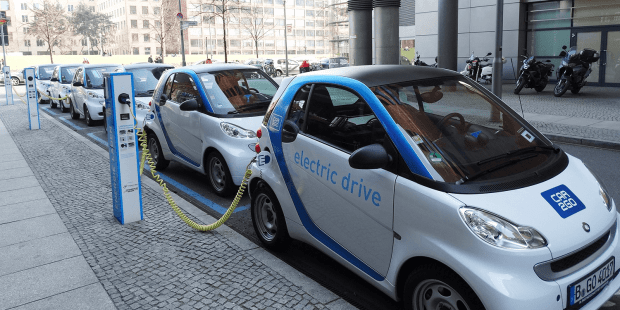


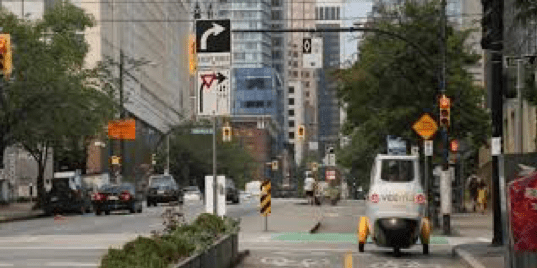
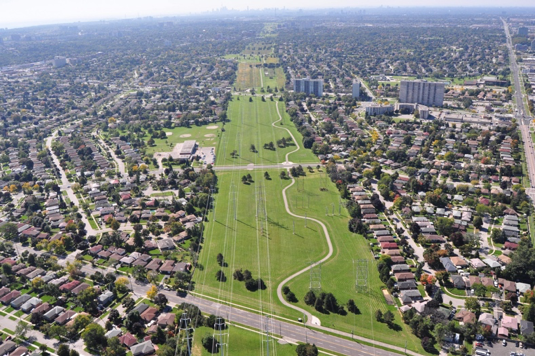
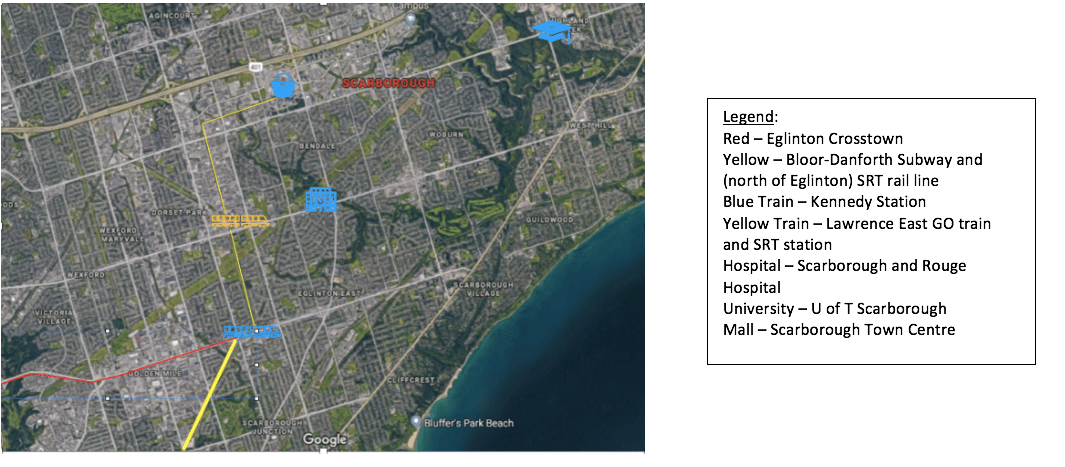
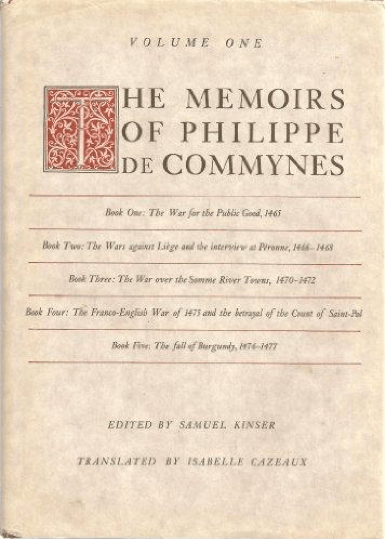

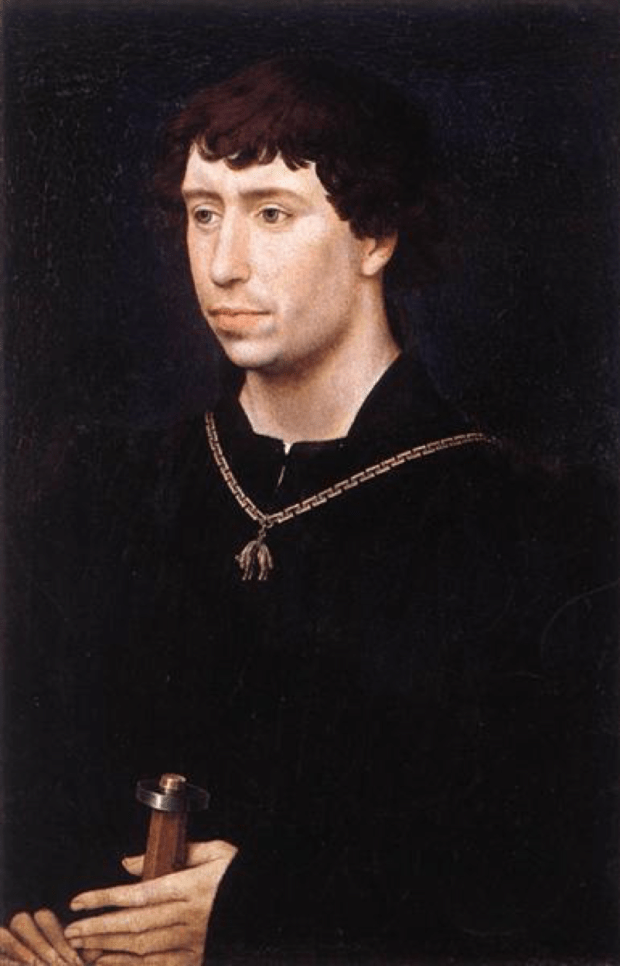
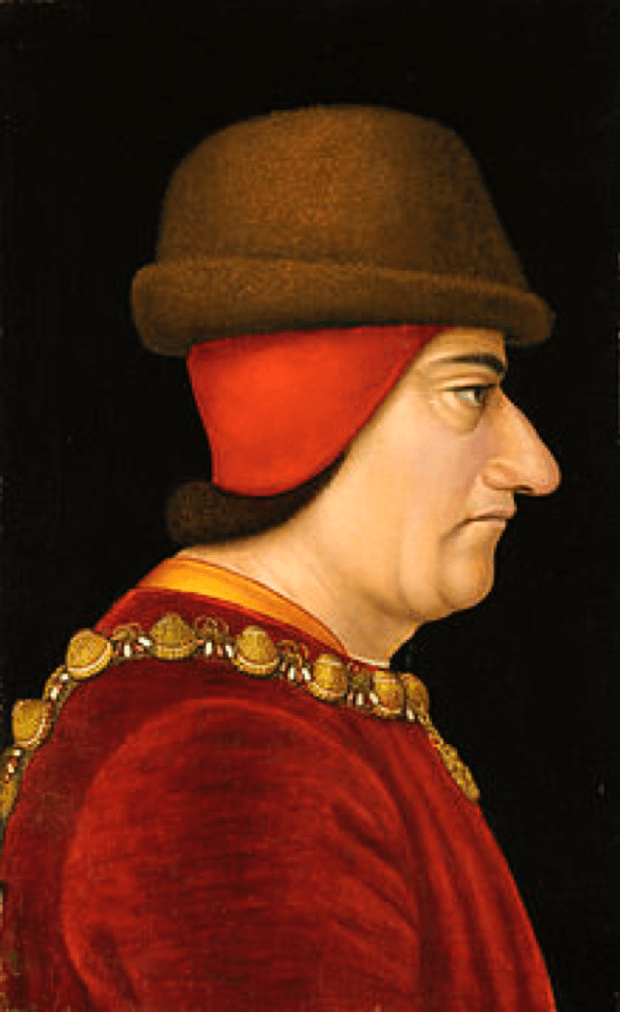


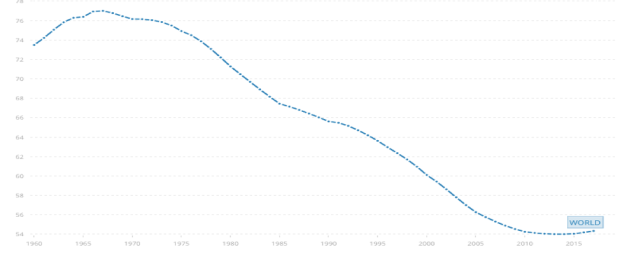
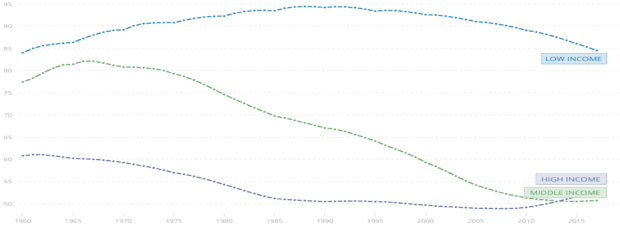
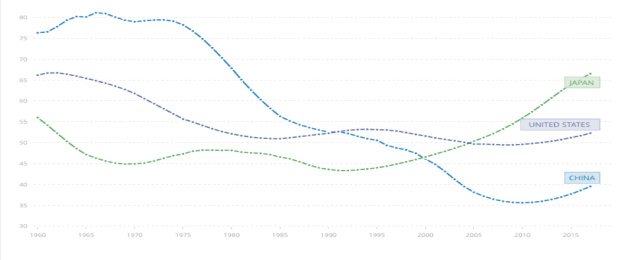

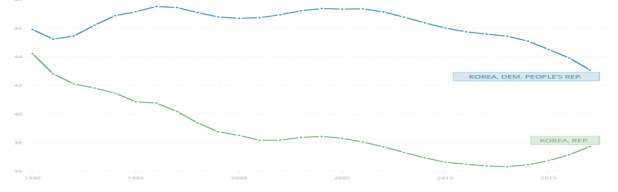
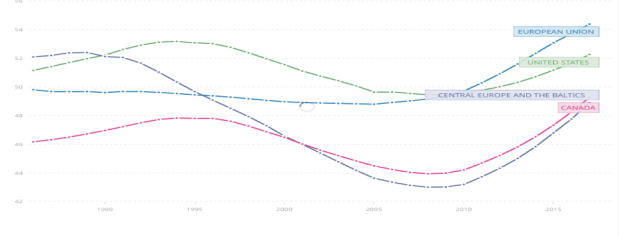

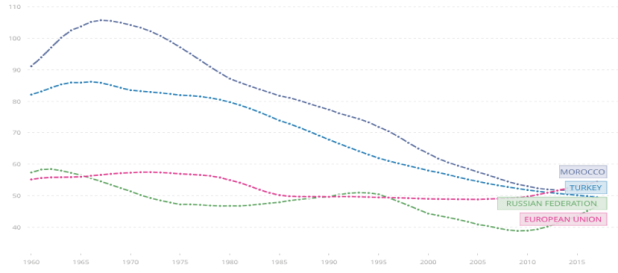


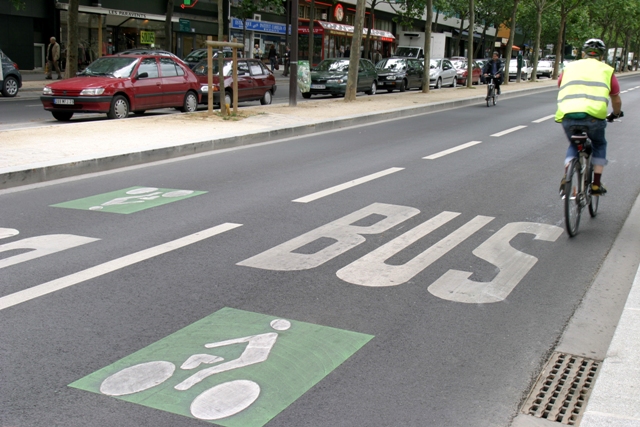
 Future Economics