The Birthplaces of China’s Leadership
Internal Chinese Geopolitics, part 1
The Geopolitics of Chinese M&A
North Korea and the Olympics Curse

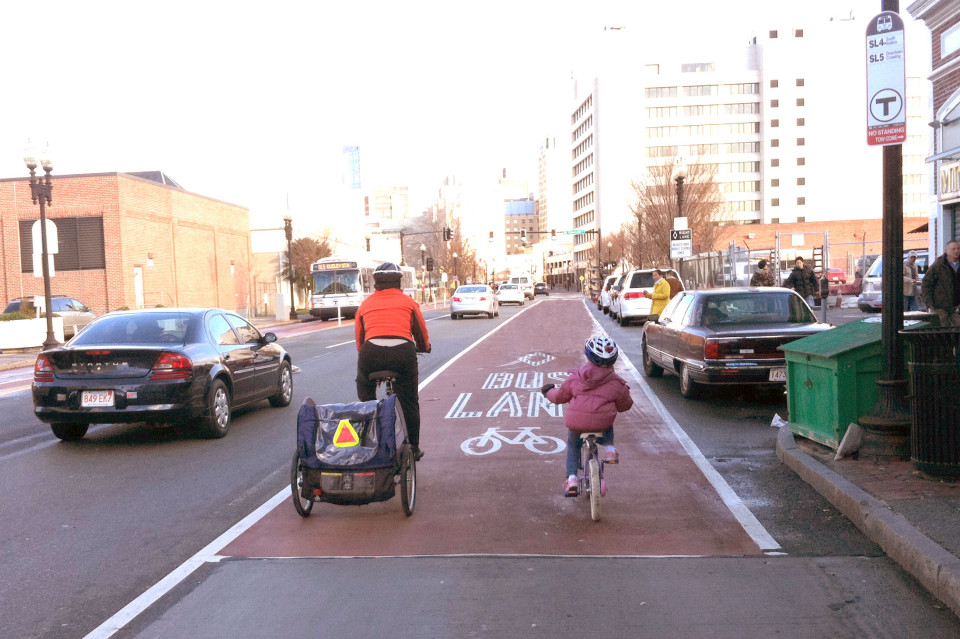
Shared bus-bike lanes are an imperfect compromise. They get buses and cyclists away from cars, but also often limit buses’ maximum speeds and force cyclists to wait behind buses at bus stops.
With today’s smartphones, though, people have two new tools at their disposal that could change how bus-bike lanes are configured: bus apps and bike-sharing (or scooter-sharing, etc.) apps.
Imagine, for example, a bus-bike lane in which a bus comes every 10 minutes on average, but with there sometimes being a much longer wait between busses. In the olden days, that long, uncertain wait could be an agonizing experience. But with bus apps and bike-sharing apps, you can:
— wait for the bus without any uncertainty as to when it will actually show up
— walk to a nearby shop (or transit oasis)to wait for the bus indoors, use the bathroom, etc.
— not wait for the bus at all, but instead rent a bike to use on the bus-bike lane
— wait somewhat longer than you otherwise would, to avoid an over-crowded bus
Obviously, these apps might make it easier to get around a city by bus or bike. But they could also, perhaps, allow for the creation of an excellent and extreme type of bus-bike lane:
The Bus Train Bike Lane
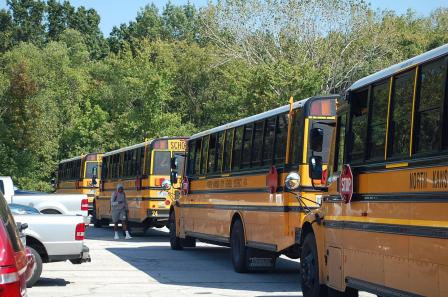
Now imagine that instead of one bus coming once every 10 minutes on average, three buses come closely bunched together in a bus ‘train’ once every 30 minutes on average. For cyclists, this would mean there would, in effect, be only a third as many buses to make them stop at bus stops. For buses too, it could mean that cyclists would no longer slow them down: whenever a bus train approaches, cyclists could simply pull over to the curb in order to let it pass.
This would not have been possible in the past of course, as waiting 30 minutes for a bus (or more, in case of delays which would inevitably occur sometimes) would not have been practicable. But with today’s excellent batch of waiting options – no uncertain wait times, the ability to walk somewhere close by to get shelter from the outdoors or to use a bathroom, the ability to rent a bike, etc. – it might actually work. Indeed, it might have several other benefits too:
To sum up, then, it’s a time-sharing, weather-adjustable, potentially semi-autonomous express bus-bike lane, where bikes and other ultra-lightweight forms of mobility are used as a first mile-last mile option for bus riders, in addition to being an excellent means of transport in their own right.
Instead of resisting the ‘bus bunching’ that occurs so frequently in our cities, the bus train bike lane would embrace it, turning bus bunching to its advantage through the use of bus apps and bike-sharing.
All aboard!

Adventures in the Age Dependency Ratio: A Demographic Overview of the World
Guest Post: The Universal Spider
Too Much Heaven: A Brief Look Back at 1979
The Birthplaces of China’s Leadership
Countries to Watch: El Salvador
Humans, Computers, and Telecommuters
When Autonomous Vehicles Leave The Nest
The League of the Overshadowed
Peace and Prosperity in Israel’s Future?
North Korea in the Next Five Years
North Korea and the Olympics Curse
The Father, the Son, and the Holy Mackinaw-what-a-comeback-for-the-Liberals!
Spanish Geo-Economics: Past, Present, and Future
The Giving Tree: Tu Bishvat and Israeli Economics
A Look Back At Barack Obama’s Foreign Policy
Presidential Beginnings and Regionalism in AmericaIn Politics, the Triple Crown is Even More Elusive
In Politics, the Triple Crown is Even More Elusive
Ontario: The Borderland Economy
The Geopolitics of Saudi Arabia
Political Dynasties and their Discontents
Complacency over Coal’s Collapse: Five Factors to Consider
Fasten Your Snowbelts – Technology and the Great Lakes
The Geopolitics of Chinese M&A
Guest Post: Political Turnover Rate in the US
Eurozone Geopolitics (and the Future of “Czechia”)
Satellite Geopolitics in Eastern Europe
Seniors Discount? Oil Prices and Old Rulers
Finally Passing Gas: 10 Winners and Losers of the Panama Canal Expansion
The Geopolitics of Cheap Energy
Why Iraq is Still So Important
10 Consequences of US-Iranian Reengagement
Europe and Arabia: A Geopolitical Perspective
Estonia in 2015: Energy, the Euro, and Elections
Why Israel Won’t Let the West Bank Go
America’s Domestic Environmental Geopolitics
The 10 Largest “Relative” Trade Networks
The Physics of Japanese Economics
Internal Chinese Geopolitics, part 1
Top 10 Myths about the Global Economy
Coming Soon (Hopefully)
Geopolitics and the English Language
Mackinder and Keynes in 1919
Founders and Friends (1700s World Leaders)
The Cedar-Sinai Region
In 1492, Other Stuff Happened Too
The Future of Shortcuts
Geopolitics 101: A Suggested Reading List
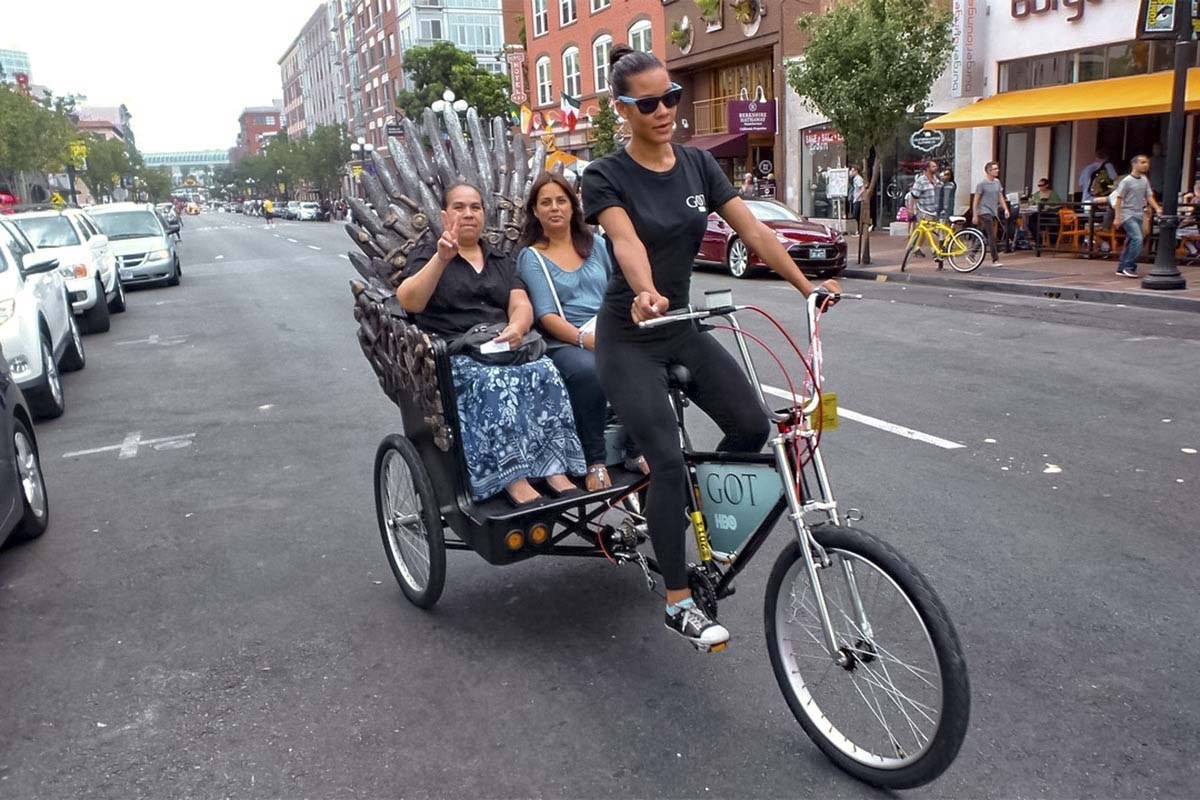
I know, I know, but I’ve decided to do this anyway. Here are the lessons:
1. Winter is Coming
In the North, cycling advocates may need to make a choice between separated bike lanes and seasonal bike lanes. While separated bike lanes are preferable, seasonal ones may be more politically viable. A seasonal compromise between cars and bikes could consist of cyclists getting a bike lane for three quarters of the year, and then that bike lane becoming a car-parking lane in winter. This would allow older drivers to park near their destinations, in order to lessen their risk of slipping on ice when walking to or from their cars.
2. Beware of Dragons
Another choice cycling advocates may sometimes face is between bike lanes on streets versus bike infrastructure at intersections (lanes, or boxes, or signals). While bike lanes on entire streets are obviously preferable, it might be more politically viable to focus on intersections first. It is in the lineup to red lights, after all, where in cyclists’ minds cars can resemble sleeping dragons: an unfurled mass of danger, with a curvy, slithering shape, their scales pushing up tightly against the curb in some places, threatening to crush you when they finally wake from their slumber when the light turns green.
3. Your Allies May Kill You…
While cars are often the fundamental cause of bike accidents, it is other cyclists themselves, the ones who think they are Lance Armstrong, who are often the proximate cause. As a normal cyclist, you may sometimes spend so much attention trying to safely navigate car traffic, that you will let your guard down and forget to be prepared for a much faster fellow cyclist trying impatiently to overtake you. Or, in GOT terms, coming to stab you in the back.
This is a problem, particularly if we want the Baby Boomers to be able to continue cycling into their seventies and beyond — and especially as faster e-bicycles proliferate. Ideally, we would have bike lanes wide enough for faster cyclists to safely overtake slower ones, or else have slower car speeds in order to allow fast cyclists to safely use car lanes to overtake slow cyclists. But advocating for wide bike lanes or slower car speeds is obviously no easy feat. Which brings us, finally, to:
4. …But You Still Need Allies
With car-sharing, many people may soon have the option of using electric micro-cars — ultra-lightweight, relatively slow ‘cars’ that are far more environmentally and economically sustainable than conventional vehicles — that they would not want to buy but would be happy to use. This, of course, would be just one part of the technological phenomenon that is also bringing cities devices like e-scooters, e-bikes, modern e-wheelchairs, and perhaps many other mobility options as well.
As usual, while it might be preferable for cyclists to have a lane for themselves that is separate from all these other vehicles, it might be much more politically viable to advocate for a single wide lane in which cyclists, micro-cars, e-bikes, electric-assist pedal cars, and any other such device would all be able to use. This might also be more environmentally beneficial, as many drivers will probably be more willing to start using a comfy micro-car themselves, rather than start using a bicycle.

Chutes
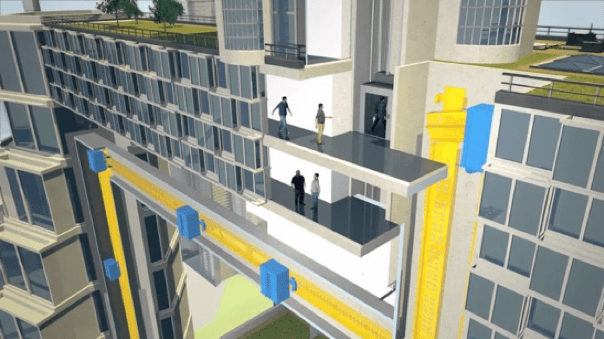
Companies like ThyssenKrupp have lately been trying to develop maglev elevators: elevators powered by magnetic levitation rather than hoisted by cables. Unlike conventional elevators, maglev elevators could be used efficiently even in extremely tall buildings. They could also be able to move horizontally, in addition to vertically, like a Wonkavator.
One of the most significant potential uses of maglev elevators has been overlooked, however: their potential to clear subway platforms far more efficiently than normal elevators, and in some cases maybe even more efficiently than escalators or staircases.
Normal elevators are terrible at getting people out of crowded subway stations quickly. They tend to cause lineups to form outside their doors. This is because only one elevator can operate within an elevator shaft at any one time.
Maglev elevators could act more like vertical escalators. They could allow multiple elevators to run within the same elevator shaft, which means that so long as you have at least two elevator shafts side by side, one with elevators going upwards and the other with elevators going downwards, multiple elevators can circulate so as to reduce lineups. As soon as one elevator has started to move upwards, another can immediately arrive and open its doors to let in new passengers.
This does not necessarily mean that it will be any faster to use the elevator – though it could become much faster, in cases where the elevator shaft spreads out horizontally at surface level in order to allow multiple elevators to let people off and on at the same time. But what it does mean is that people would be able to get off of their subway platform and onto an elevator more quickly. This, in turn, could mean more comfort and safety within crowded subway stations, and the ability to have trains pulling into stations at shorter intervals.
These elevators could also be very useful for disabled subway passengers, not only by reducing platform and elevator crowding but also because the ability for elevators move horizontally as well as vertically might, in some subway stations, mean that passengers would no longer need to transfer from one elevator to another in order to travel between street level and the subway platform.
One type of station where maglev elevators might be particularly useful could be for trains or bus lines that run in the median of a highway. Maglev elevators could help people access these stations by moving up, across, and then back down (or, if the elevator ran in a tunnel under the highway, down, across, and back up) in order to get people from the side of the highway to the station.
Eventually, perhaps, maglev elevators could also help allow subway lines to be built deeper underground, and at odd angles to the streets above them. This might, in some cases, allow subway lines to be built as diagonal shortcut routes below their cities’ grid-patterned streets, deep enough to avoid the basements of the buildings above them.
Ladders
Of course, the use of maglev elevators remains annoyingly speculative at this point. In certain situations, there may be lower-tech ways to achieve similar goals:
Downtown subway stations tend to have passengers getting off trains in the morning and back on trains in the evening. As a result, they have a much greater need to clear their platforms quickly in the morning than they do in the evening, and a much greater need to provide spacious platforms in the evening than they do in the morning. Having some of their staircases be retractable (verybasic examples can be seen hereor here), so as to provide a greater number of staircases to help clear platforms in the morning, but fewer staircases taking up precious platforms space in the evening, could perhaps be a decent idea
2. Space beneath staircases or escalators
Another idea to address the trade-off between the number of staircases (or escalators) and the amount of platform space available could be to better utilize space beneath staircases or escalators. Here’s an example of space being used below an airport escalator, for example:

3. Actual Ladders
The worst, but also most fun, solution of all could be to have a bunch of short, sheltered ladders to allow people to climb up and out of a station at the same time.

In theory, ladders are the most space-efficient way to move upwards. In theory, you could have hundreds of ladders fit in a single subway station, allowing a platform to be cleared immediately. Theory is great.

Some of these ideas are much sillier than others. I’ll leave you to decide:
Transit Oases
The Bus Train Bike Lane: A Bus-Bike Lane for the Smartphone Era
Car-Sharing Vehicles Doubling as Sheltered Bus Stops
Game of Thrones’ Lessons for Cycling Advocates
The Three Card Monty
Next Man Up: The Passenger-Driven Bus
Bus-Bike Lanes: Can I Interest You in a Time-Share?
Trolley-Trucks and Autonomous Cargo Handling
Like Night and Day (E-Commerce Transit)
An Electric Car/Bike Lane Plan, for Cities like Toronto
Toronto’s Railways to Nowhere (Semi-Autonomous Cars)
The Witching Hour
RoRoRo Your Car
Superhighway in a Box
Numerology and Public Transit
The Private Sector
The Intersection of Yonge and Danforth
Devil’s Advocate: Elon Musk
Travel by Hibernacula
Night Moves
Chutes and Ladders
Coming Soon (Hopefully):
The Roombus
Facelift
Tortoise v. Hare, 2K19
The Wine Cellar
The Lucky Bus
Unferries
The Parkway
Double-Decker Buses for Short People
Gaga For Gondolas
Customs-Built Transit
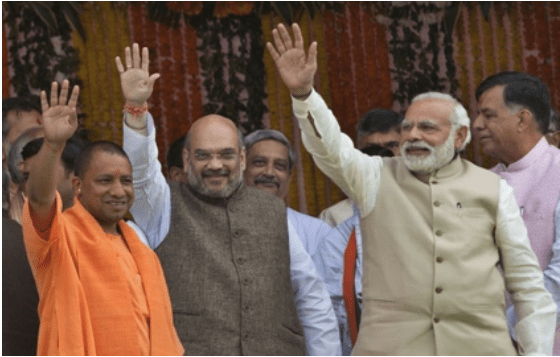
With a slowing economy, a rival Congress Party forming alliances with regional parties in states like Tamil Nadu, and a separate alliance being formed between two former Chief Ministers of India’s most populous state, Uttar Pradesh, many had expected Narendra Modi to risk losing his majority government, and perhaps even his position as prime minister, following the elections held in India this month. Instead, Modi’s Bharatiya Janata Party (BJP) increased the size of its majority, winning 56 percent of seats—or 65 percent, when combined with smaller BJP-allied parties—in the lower house of India’s parliament. BJP’s rival the Congress Party, which had held the office of prime minister in 55 out of India’s 67 years prior to Modi’s being elected, won just 10 percent of seats. Congress’ alliance won 17 percent of seats, mainly thanks to voters in Tamil Nadu.

As in the previous election in 2014, the BJP and its alliance dominated the north and west parts of India, leaving Congress’ alliance, along with several parties unaffiliated with either Congress or the BJP, to split the smaller south and east[*]. The unaffiliated BSP-SP alliance in India’s north, meanwhile, which was formed in response to the BJP sweeping Uttar Pradesh in 2014 and winning state-level elections in Uttar Pradesh in 2017 (for the first time since 1996), won just three percent of seats[**].
[*]More so than in 2014, however, the BJP now made inroads into the south and east, notably in West Bengal, Odisha, Telangana, and Karnataka
[**]Despite receiving a sizeable chunk of India’s popular vote, because of how populous Uttar Pradesh is. This occurred to an even greater extent in the previous election: in 2014 the BSP received more than 20 million votes, the third most of any party in India, yet did not get even a single seat in parliament
Modi’s BJP was thus able to be re-elected with a majority government for the first time in its history. The only politicians who had ever previously been re-elected with a majority were India’s founding prime minister, Jawaharlal Nehru, and Nehru’s daughter Indira Gandhi. By defeating Indira’s grandson Rahul in the past two elections, Modi has now joined this illustrious list.
Modi has many skills that have contributed to this political success. He is notoriously hard-working and uncorrupt, for example. Yet Modi has also been in possession of an even more important attribute thus far during his political career, the most important a politician can have: luck.
A Quick Analysis of Modi’s Career
Modi’s political career, first as Chief Minister of Gujarat from 2001 to 2014 and then as Prime Minister of India since 2014, has been based on two pillars:
These two aspects of Modi’s appeal have contributed to his political success in northern India in particular, where Hindi(-Urdu) is spoken relatively widely and where, especially in inland states like Uttar Pradesh and Bihar, poorer populations live who may be more susceptible to BJP-style nationalism or promises of economic growth (or at least, of reduced corruption). Modi himself represents the constituency of Varanasi, in Uttar Pradesh. 20 percent of BJP seats are from that state.

This has led to an obvious, arguably misleading debate in Western media, over whether Modi’s economic pros justify his political cons. This might or might not be a legitimate debate, but it also overlooks one of the key realities of Modi’s career: the fact that much, maybe most, of his economic success has been due to factors beyond his control. Modi has been extremely lucky in relation to factors such as global economic growth, oil and gas prices, and the utterly different economic characteristics of Gujarat (the state where Modi rose to fame) compared to India as a whole.
Gujarat, 2001 to 2014
Modi was Chief Minister of the state Gujarat from October 2001 until May 2014, when he became India’s prime minister. Two facts must be recognized to put Modi’s time in Gujarat into context: the exceptional status of Gujarat, and the exceptional nature of the period from 2001-2014.
The period from 2001 to 2014 was the 2000s commodity boom, the period that followed the early 2000s recession when, apart from a sharp dip during the 2008-2009 recession, energy and other commodity prices were high and global economic growth was significant, particularly in China and other developing markets but also in North America and (before the 2010s) Europe. Brent crude oil, for example, rose from all-time lows of $9 in 1998 to $144 in 2008 and $128 in 2012. Modi came into office in Gujarat when oil prices were $20, exited office with oil at $110, then watched from his new office in New Delhi as oil prices fell to $46 in the subsequent seven months.

The characteristics of Gujarat’s economy are similarly exceptional. Together with its next-door neighbor the city of Mumbai, the state of Gujarat is India’s leading commercial hub. This is largely a result of Gujarat’s uniquely long and naturally sheltered coastline, which has allowed it to account for an estimated 69 percent of all cargo volume handled at India’s private ports, as well as being home to India’s busiest public port, a remarkable feat considering that Gujarat’s 60 million people are only 5 percent of India’s population.
Just as remarkable is the Gujarati diaspora, which leads in commercial activity throughout much of the Indian Ocean, particularly in eastern Africa. (The most famous Gujarati abroad was, of course, Mohandas Gandhi, who lived in South Africa for more than two decades). The diaspora thrives as far away as the US, where 20 percent or so of US-Indians are Gujaratis, and are one of America’s most successful groups.
The Gujarati diaspora has historically also been prominent in the nearby Gulf region of the Middle East. It remains active in the Gulf today, particularly in Oman and the coast of Pakistan. Gujarat itself, moreover, holds the most prominent position in India’s oil and gas industries, in terms of oil production, oil refining, oil pipelines, gas pipelines, LNG regasification, and petrochemicals.

As such, the commodity boom and global economic growth helped Gujarat remain the fastest-growing Indian economy in the 2000s, apart from the small Himalayan states Uttarakhand and Sikkim.
India, 2014 to 2019
India’s economy is the opposite of Gujarat’s. It is relatively insular rather than dependent on global economic activity, the major exception to this being the large amount of oil it imports, more than any country apart from the US or China. Global economic conditions since Modi became prime minister are unlike those which existed prior to 2015, however. Oil prices have fallen to a range of $30-$70, benefiting India. Global and developing markets have slowed, which has hurt India but not nearly as much as it has hurt most other economies, in particular commodity exporters like Brazil or Russia. Indeed, India has become the fastest-growing “BRIC” economy.
There is even a possibility that India’s slowing economy has helped Modi. It may be that the slowing was not severe enough to undercut Modi’s reputation as a great economic steward, yet was significant enough for people to want a great economic steward – Modi – to remain in charge in order to deal with it. In other words, the lucky timing that helped Modi to build up his economic reputation in Gujarat, combined with the luck which has prevented India’s recent economic slowdown from being severe like many other countries’, may have helped lead to Modi’s huge victory.
—
This is not a unique situation. Politicians, no matter how praiseworthy or skilled, often do not control their own fortunes. Modi remains in luck now. More troublingly, perhaps, so does Yogi Adityanath.

2019 Playoffs:
The Holy Month of Sports Begins
Basketball:
Should Openers be used in the NBA Playoffs?
Professional Time Wasters
Offense-Defense for 48 Minutes
Cornerstone Players
Hockey:
The Spiral of Death
Goalies and Garbage Time
Robots and NHL Expansion
Back to the Lake
The Londons’ Knights
Other:
Everyone for Tennis?
Keynesian Sports Fans
North Korea and the Olympics Curse
The Eternal Question
Gunslinger
Wall Ball

One of the most fitting aspects of the phrase “transit deserts” – areas drastically underserved by public transit – is the mirage-like effect you get when, straining your eyes toward the suburban horizon, you trick yourself into thinking that the headlights of an approaching car is actually the bus you desperately want to arrive.
Today, however, as transit apps get more accurate, the era of transit mirages may be nearing an end. You can now simply look at your phone, or in some cases at a television screen at your bus stop, to see when the next bus will arrive.
In many cases, transit apps might also put an end to another desert-like quality of public transit: waiting in uncomfortably cold or hot temperatures. Equipped with accurate information about when the next bus is likely to approach, passengers might have the option of waiting for their bus indoors a short walk away from their bus stop.
This might have significant implications for the public or private sector. The public sector could, perhaps, create transit oases: indoor waiting areas that passengers could enter by using their transit passes to pre-pay their bus fare, or outdoor parkette spaces where people could wait with shade, nice surroundings, picnic tables, etc.* Or the private sector could provide a similar service, maybe combining transit waiting areas with laundromats, convenience stores, cafes, etc.
Because some transit apps have even begun providing information about how crowded each approaching bus is, having a more comfortable waiting area of this sort could also give passengers the option of waiting a bit longer than they need to, in order to wait for a less crowded bus to arrive. This could be very useful: public buses tend to bunch fairly close together, and the front bus in each grouping tends to be much more crowded than the buses further behind it. With transit apps, people could simply wait to get on a less crowded bus, without taking the risk that the bus further behind will be just as crowded or will not arrive any time soon.
Similarly, transit apps can give passengers real-time information about express buses, which could help allow passengers to let a normal bus go by in order to wait for an express bus approaching after it.
Another common challenge in transit deserts, where waiting times are often long and uncertain, and where bus journeys are often long as well, and often require multiple transfers, and often involve seniors or babies, is the lack of bathrooms at bus stops, and the lack of accessible public bathrooms in general. Transit oases could be a godsend, then, for those who cannot hold their water like a camel.


A somewhat similar, even bolder experiment should perhaps be tried in the NBA playoffs.
Instead of teams saving their best players’ heavy-minute performances for games late in a series – Lebron James, for example, played all 48 minutes in Game 7 of the semi-finals last year; it was the 339th time since 1984 that a player had played an entire game — why not instead have them play big minutes early in the series?
It is true, teams employing this strategy would risk their star players running out of gas late in the series (not unlike how the Tampa Bay Rays risk blowing leads late in games because they have already used up one of their best relievers in the first inning). Yet they would also increase the odds of getting to play in a long series in the first place. Even better, they would increase the odds of their team winning a series quickly, which would actually allow their stars to play far fewer minutes overall than they otherwise would.
An extreme illustration of this: 45 minutes per game in a 4-game sweep = 180 minutes total; 40 minutes per game in 7 games: 280 minutes total (plus two or three more airplanes). As is often the case in life, if you work hard early on you might save yourself work overall.
It’s a simple set of questions: Is it better to concentrate, rather than spread out, your best players’ minutes on the court during a series? The obvious risk to concentrating minutes is that tired players could become less effective or more prone to injury. Nevertheless if it is better to concentrate them, why not do so as early as possible, rather than wait until late in the series to do so?

 Future Economics